
News
Woman Accused in High Defamation Blames AI As Case Exposes How Mombasa Billionaire Mohamed Jaffer Allegedly Sponsored Smear Campaign Linking Joho’s Family To Drug Trafficking
Most painfully for the Joho family, the letter attacked their elderly mother with salacious claims about her personal life and suggested Abu was born out of wedlock.

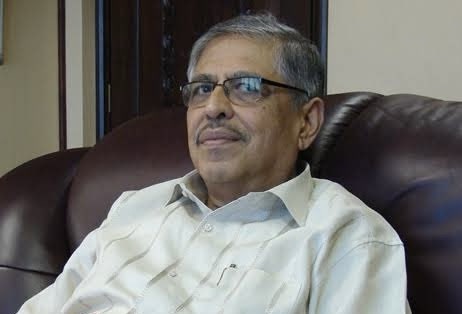
A sensational defamation case against Mombasa businessman Abubakar Joho has taken a dramatic twist after the accused claimed a key document linking her to explosive allegations of drug trafficking and Sh40 billion fraud is an artificial intelligence fabrication.
Matilda Maodo Kinzani, personal assistant to billionaire tycoon Mohamed Jaffer, has successfully halted her prosecution at the High Court by challenging the authenticity of forensic evidence that prosecutors say proves she authored defamatory posts targeting the Joho family.
The case, which has gripped the coastal business community for months, has laid bare a vicious rivalry between two of Mombasa’s most powerful businessmen, with shocking allegations of systematic character assassination, monopolistic practices and decades of business warfare now playing out in open court.
Through her lawyer Michael Oloo, Kinzani told the High Court on Wednesday that the contested forensic report is nothing more than a computer-generated fabrication with no credible author, no date, no signature and no laboratory reference number.
“What was produced was said to be a report by Chief Inspector Joseph Kolum, but it had no author. It was not dated, not signed and did not specify the name of the author. It had no laboratory reference number and no exhibit memo from the investigating officer,” Oloo argued before the High Court.
The defence maintains the document lacks the mandatory certificate of electronic evidence required under Kenya’s Evidence Act and should be struck from the record entirely. Kinzani has also demanded the entire criminal trial be declared null and void.
The High Court granted the prosecution 21 days to respond to the application, effectively suspending proceedings in a case that has already exposed the dark underbelly of business competition at Kenya’s largest port.
The defamation saga began in July 2024 when a letter titled “To the Government of Kenya and the Gen Z” went viral on social media during the politically charged nationwide protests. The document made grave accusations against Abubakar Joho, elder brother to Mining and Blue Economy Cabinet Secretary Hassan Joho, including claims he trafficked drugs hidden in rice shipments, stole Sh40 billion from Mombasa County coffers and illegally grabbed land belonging to Kenya Railways.
Most painfully for the Joho family, the letter attacked their elderly mother with salacious claims about her personal life and suggested Abu was born out of wedlock.
“The allegations labelled me a child born out of wedlock. That hurt me deeply. You can’t abuse my family and expect me to stay silent,” Abu told Mombasa Senior Resident Magistrate David Odhiambo in May during his rare court appearance.
In explosive testimony that has since become the talk of business circles, Abu directly named Mohamed Jaffer as the mastermind behind the smear campaign, accusing the billionaire of orchestrating a decades-long pattern of character assassination designed to eliminate business competition.
“He has had a monopoly for 30 years. Now that I’ve entered the business at the port, that’s where our problems began. He’s the monopoly, I am not,” Abu declared.
Jaffer, who owns Bulkstream Ltd, formerly Grainbulk Handlers Limited, holds the exclusive licence for mechanical bulk grain handling at the Port of Mombasa. Abu operates Autoport Freight Terminus and Portside Freight Terminal, competing directly in the lucrative port logistics sector worth billions of shillings annually.

Abu Joho and brother Hassan Joho.
According to court documents and police testimony, cybercrime investigators initially traced the defamatory content back to electronic devices linked to Kinzani. Chief Inspector Joseph Kolum told the magistrate’s court his forensic analysis showed the document originated from a computer associated with Kinzani and that author details pointed to her name.
However, the defence has systematically dismantled the prosecution’s case by exposing serious irregularities in how the evidence was collected and presented.
Police Constable Fredrick Muchiri of the Anti-Terror Police Unit, who participated in raids on Kinzani’s home and workplace, made damaging admissions during cross-examination. He revealed his handwritten statement had mysteriously gone missing from the court file, with only an unsigned typed version remaining. He also acknowledged the typed statement contained typographical errors.
Even more bizarrely, Muchiri admitted investigators never recorded a statement from Kenya Railways Managing Director Philip Mainga, despite Mainga allegedly being the one who first alerted Abu Joho to the existence of the defamatory document.
“The information we received is that it was Mr Mainga who notified Mr Abu of the defamatory document. However, I have not examined his phone to verify the communication,” Muchiri testified.
The involvement of seven Anti-Terror Police Unit officers in what appeared to be a straightforward cybercrime case also raised eyebrows, with the defence questioning why Kenya’s counter-terrorism unit was investigating alleged defamation instead of the designated cybercrime division.
Muchiri defended his unit’s involvement by insisting he was acting on instructions from superiors and that the law authorizes any police officer to investigate any case.
The defence has also pointed out that Abu Joho never mentioned Jaffer’s name in his initial complaint filed at Central Police Station. Muchiri admitted during cross-examination that he reviewed the statement and confirmed Jaffer was not named. Abu only learned of Jaffer’s alleged involvement after investigations linked Kinzani, identified as Jaffer’s employee and personal assistant, to the defamatory letter.
The case has become a lightning rod for long-simmering tensions in Mombasa’s business community, where insiders say Jaffer has maintained an iron grip on port operations for three decades through what critics describe as monopolistic practices and ruthless elimination of competitors.
Business rivals and industry sources, speaking on condition of anonymity, have painted a disturbing picture of Jaffer’s alleged business tactics. They claim he has systematically used fabricated scandals, legal warfare and political connections to crush competition across multiple sectors including LPG distribution, grain handling and fertiliser trading.
The most explosive allegations involve claims that Jaffer sabotaged the government’s subsidized Gas Yetu initiative, a Sh3 billion program designed to provide affordable cooking gas to millions of Kenyan families. Industry insiders allege he feared the program would undercut Pro-Gas profits and orchestrated its collapse through strategic bribes, artificial supply chain problems and negative media coverage.
Sources also claim Jaffer’s business warfare extended to Tanzania, where President John Magufuli revoked his Import Container Depot licence, prompting Jaffer to sue the Tanzanian government. In Uganda, President Yoweri Museveni reportedly blocked Jaffer’s plans to establish an ICD in Tororo after being briefed on his monopolistic practices in Kenya.
Abu Joho’s testimony revealed the devastating personal toll the alleged smear campaign has taken on his family. He recounted painful conversations with his children who asked whether their family’s income was honestly earned after reading online accusations that their father hid drugs in rice.
“‘Dad, are we really feeding from honest income? We read that it’s claimed you put drugs in rice and sell it to people,’” Abu recounted, his voice breaking as he testified.
He maintained his business operations are entirely legitimate and that he has never engaged in drug trafficking or grabbed land belonging to Kenya Railways.
“This is not business competition. It’s character assassination. It has affected me, my business, and my family,” Abu said. “You can’t drag my name through social media just because of business rivalry. If you have a problem, report it to the police.”
Kinzani faces four criminal charges under Section 23 of the Computer Misuse and Cybercrimes Act for allegedly disseminating false information online. She has denied all accusations and is currently out on Sh300,000 cash bail.
During his testimony, Abu offered a remarkable olive branch to his accuser despite the gravity of the allegations. “I respect her family. I never had a problem with them until now,” he said, adding, “If it’s proven that the document didn’t originate from Ms Kinzani, then I’ll hug her.”
The case has also exposed the increasingly sophisticated role of technology in modern defamation disputes. Legal experts say the AI defence represents a new frontier in Kenyan cybercrime law, forcing courts to grapple with questions about the authenticity of digital evidence in an era when artificial intelligence can generate convincing fake documents.
Kenya’s Computer Misuse and Cybercrimes Act of 2018 was designed to combat digital fraud and the spread of false information online, but it was drafted before the explosion of generative AI technologies that can now create realistic text, images and even videos that are difficult to distinguish from genuine content.
The Evidence Act requires electronic evidence to be properly certified with clear chain of custody documentation. Kinzani’s legal team argues the prosecution has failed to meet this threshold, pointing to the absence of any certificate of electronic evidence, the missing handwritten police statement and the lack of the actual device allegedly used to create the document.
“The document has no certificate of electronic evidence as required by the Evidence Act. There is no chain of custody and no compliance with admissibility guidelines,” the defence stated.
They also noted the document was purportedly addressed to the Government of Kenya, which is not a party to the proceedings, and was never mentioned in earlier forensic reports presented by prosecutors.
Chief Inspector Kolum told the court that although the specific device used to generate the document was never physically recovered, his data analysis linked it to Kinzani. He also revealed she left the country shortly after the document was authored, a detail prosecutors say demonstrates consciousness of guilt.
Several electronic devices were recovered during raids on premises linked to Grain Bulk Limited and subsequently returned to Kinzani after forensic analysis in Nairobi. The information retrieved allegedly showed she was an employee of the company and a regular user of some devices, though the defence disputes the reliability and admissibility of this evidence.
The magistrate’s court had earlier ruled the contested document could be produced but not necessarily admitted as evidence, prompting Kinzani to escalate the matter to the High Court where she argues admitting it would violate her constitutional right to a fair trial.
The High Court is expected to rule on whether the forensic report will remain on record or be struck out, a decision that could determine the fate of the entire prosecution.
For Abu Joho, the case represents far more than personal vindication. It has become a battle for the integrity of business competition in Kenya and a test of whether powerful tycoons can use smear campaigns to eliminate rivals with impunity.
“All I want is justice,” Abu concluded his testimony. “Not just for my family, but for every Kenyan who has suffered under this man’s ruthless pursuit of profit at any cost.”
The Joho family has faced multiple legal battles in recent months, including a Supreme Court decision that nullified a Sh5.8 billion grain facility deal at Mombasa port involving Portside Freight Terminals Limited, a company linked to the family. The ruling dealt a significant blow to their logistics empire and intensified already fierce competition at the port.
As the case unfolds, it promises to reshape not just Mombasa’s business landscape but potentially Kenya’s entire approach to monopolistic practices, cybercrime prosecution and the use of digital evidence in courts.
The next hearing is scheduled for early 2026, when prosecutors must respond to Kinzani’s application to have the case declared null and void. Legal observers say the outcome could set important precedents for how Kenyan courts handle AI-related defences in cybercrime cases and what standards of evidence are required to prove the authenticity of digital documents in the age of artificial intelligence.
For now, Mombasa’s business community watches anxiously as two of its most powerful figures battle in court over allegations that have exposed the often brutal reality behind Kenya’s gleaming port infrastructure and multi-billion shilling logistics industry.
Kenya Insights allows guest blogging, if you want to be published on Kenya’s most authoritative and accurate blog, have an expose, news TIPS, story angles, human interest stories, drop us an email on [email protected] or via Telegram













Nyali MP Moha Jicho Pevu Caught Up In Alleged Sh44 Million KPA Debt Scam

Somalia Deputy PM Held at JKIA, Deported Over Questionable Acquisition of Kenyan Passport

The White-Coat Heist: How MP Shah Hospital Ran a Decade-Long Double-Extraction Racket While Hiding Behind Charity Status

The Patriarch, His Children, and a Buried Sh3.9 Billion Fraud: The Story of Titus Muya That Kenya Was Never Meant to Read

The Founder’s Ransom: How Titus Muya Had to Be Paid Sh231 Million to Let Go of Family Bank and Why That Bill Is Now Yours

Kenya’s gambling industry pushes back against a licensing bill

Kenya Airways Sinks Into Deeper Turbulence As American Supplier Sues In New York Court Over Sh129 Million Unpaid Debts

Kenyan player wins a Ksh3.2 million jackpot

IEBC Sets August 10 Date For 2027 General Election

Furious Ruto Lashes Out at Gideon Moi Over Repeated ‘Blackmail, Extortionist’ Headlines on The Standard and KTN

Businessman Philip Waithaka Kinuthia’s Minor Son Allegedly Drove Drunk, Killed Two Peponi Students in Ngong Road Horror Crash as Claims of Cover-Up Intensify

Inside NCBA’s Decline: How a Banking Giant Lost Its Strategic Edge

South Sudan: Adut Salva Kiir’s Shadow Treasury Exposed

Cement, Cash and Courts: How the Hashu Dynasty Crushed the Ramji Brothers for Fourteen Years and Why the Walls Are Now Closing In

Standard Chartered Ghosts Haunt Joshua Oigara At Stanbic As Whistleblower Spills Beans

Inside The Urban Planning Cartel That Owns Nairobi

THE VULTURE AND THE SCHEME How Nairobi West Hospital Became the Most Dangerous Institution in Kenya’s SHA Ecosystem and Why the Books Must Be Audited Now

The President’s Daughter and The Missing Witness: How Adut Salva Kiir’s Shadow Treasury Silenced Its Most Dangerous Critic

How Adil Popat Saved His Empire On The Eve Of Imperial Bank Collapse and Why Kenya’s Mainstream Media Buried The Story

Why John Ngumi Is Running From the EACC and Why the Sh415 Million Payday May Be the Least of His Worries
-
 News2 weeks ago
Businessman Philip Waithaka Kinuthia’s Minor Son Allegedly Drove Drunk, Killed Two Peponi Students in Ngong Road Horror Crash as Claims of Cover-Up Intensify
-
 Investigations1 week ago
THE VULTURE AND THE SCHEME How Nairobi West Hospital Became the Most Dangerous Institution in Kenya’s SHA Ecosystem and Why the Books Must Be Audited Now
-
 Business2 weeks ago
How Adil Popat Saved His Empire On The Eve Of Imperial Bank Collapse and Why Kenya’s Mainstream Media Buried The Story
-
 Business4 days ago
BURRIED TWICE: The Victoria Bank CEO Yogesh Pattni Files
-
 Business1 week ago
Inside the Billion-Shilling Betrayal: How Senior Treasury Officials Plundered a UN Poverty Fund and Built a Real Estate Empire on the Backs of Kenya’s Rural Poor
-

 Business1 week ago
The Listing That Doesn’t Lie: What the Market Isn’t Saying About Family Bank’s NSE Debut
-

 Business1 week ago
The Banker Who Walked Away: How Yogesh Pattni Survived a Financial Crime Scandal That Shook Kenya
-

 News6 days ago
My Life Is In Danger: Investor Drops Bombshell Expose On Thomas Ogutu CEO VeGrid Ltd And Fugitive Nairobi CEC Charles Kerich – DCI Inaction And Corruption Network Exposed