
Business
Airtel Owner Is Considering Exiting Kenyan Market

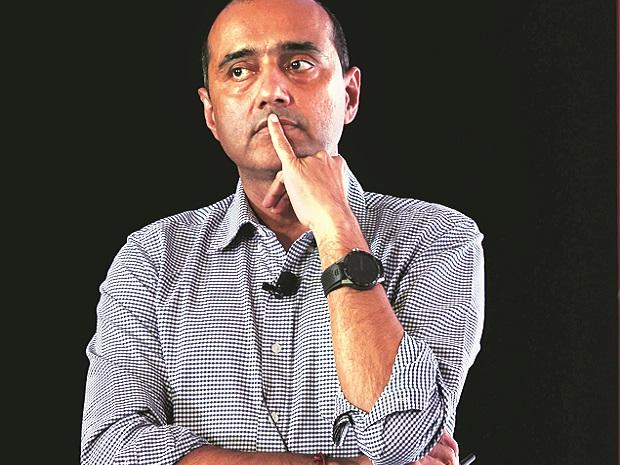
Bharti Airtel CEO Gopal Vittal has summoned his right-hand man in Africa Raghunath Mandava to weigh up the worth of his Kenyan business according to information availed to Kenya Insights.
This follows Nairobi’s request the company give up 30% of its capital to Kenyan businesses by 2024.
Nairobi’s announcement on 9 April that all foreign operators would have to open up 30% of their capital to Kenyan businesses by 2024 has shaken Bharti Airtel’s leadership. With the Indian telecoms major’s attempt to convince telecomms minister Joe Mucheru to delay that date until 2026 having fallen upon deaf ears.
CEO Gopal Vittal has summonned his representative in Kenya Prasanta Das Sarma and the head of the company’s Africa division Raghunath Mandava, also based in Nairobi, to study the possibility of closing down the shops.
According to National Information Communication and Technology Public Policy Guidelines of 2020, ICT companies from abroad will now give Kenyans a 30 percent stake to be considered Kenyan.
The international companies with an interest in the Kenyan market will have to give the 30% stake to be considered as Kenyan companies in a push for a local stake as a requirement to obtain licenses in the country. Companies were given 3 years to comply with the local ownership regulations. The time frame was a subject to a one-year extension by the ICT Cabinet Secretary upon request.
“It is the policy that only companies with at least 30 percent substantive Kenyan ownership, either corporate or individual, will be licensed to provide ICT services. For purposes of this rule, ICT companies without a majority Kenyan ownership will not be considered Kenyan, and may thus not be calculated as part of the 30 percent Kenyan ownership calculus,” reads the policy in a recent Gazette Notice.
The regulation is part of a government effort to grow the ICT Sector in Kenya by encouraging equity participation among Kenyans.
Listed companies will conform to the equity participation rule ‘to the extant rules of the Capital Markets Authority’.
The new law also requires that the government ICT procurement processes will give preference to local ICT companies in the award of tenders, including in sectors like security and defense. Further, where local businesses cannot fulfill tender requirements, foreign companies will have to transfer skills to local firms.
“Kenyan built solutions will be preferred over any other solution; where there are no local businesses that meet the tender requirements, skills transfer to local firms and personnel will be a mandatory requirement,” continues the Gazette Notice.
Kenya Insights allows guest blogging, if you want to be published on Kenya’s most authoritative and accurate blog, have an expose, news TIPS, story angles, human interest stories, drop us an email on [email protected] or via Telegram


How Adil Popat Saved His Empire On The Eve Of Imperial Bank Collapse and Why Kenya’s Mainstream Media Buried The Story

South Sudan: Adut Salva Kiir’s Shadow Treasury Exposed

Wajir North MP Ibrahim Abdi Dissatisfied With2026/27 Budget, Claims It Totally Excludes North Eastern Region

The Eldoret Tax Fortress: How David Langat Turned an Industrial Park Dream Into Kenya’s Most Sophisticated Domestic Tax Haven

Why John Ngumi Is Running From the EACC and Why the Sh415 Million Payday May Be the Least of His Worries

Shiquo Hii Style Store Was Not Raided, Anti-Counterfeit Authority Confirms; Says Influencer Used Empty Shelves for Content as She Relocates

Treasury CS Mbadi Unveils Sh4.8 Trillion Budget Estimates

Fraud, Misrepresentation and A Decade Of Evasion: How Indo Africa Finance Pocketed Sh150 Million Youth Funds and Fought To Keep Every Cent

Kenya Picks Chinese Firm For Sh375 Billion JKIA Upgrade Project After Adani Fallout

The President’s Daughter and The Missing Witness: How Adut Salva Kiir’s Shadow Treasury Silenced Its Most Dangerous Critic

Cement, Cash and Courts: How the Hashu Dynasty Crushed the Ramji Brothers for Fourteen Years and Why the Walls Are Now Closing In

Inside The Urban Planning Cartel That Owns Nairobi

Standard Chartered Ghosts Haunt Joshua Oigara At Stanbic As Whistleblower Spills Beans

Inside NCBA’s Decline: How a Banking Giant Lost Its Strategic Edge

Why Ruto’s Favourite Candidate Adan Mohammed Could Be Locked Out of the KRA Top Job

LifeCare on the Brink: SHA Fraud, Stolen Wages, and the Rotten Empire Jayesh Saini Built

Betika Faces DCI Probe, Directors Arrest and License Revocation Over Massive 29.5 Million Safaricom Customers’ Data Breach

Este Medical Kenya Fights American’s Explosive Complaints

Fresh Move Launched to Remove Kenya Railways MD Mainga From Office After Awarding Sh817 Million Consultancy Contract

The Rot Inside Absa: How Bank Insiders Are Looting Nairobi’s Customers
-
 Investigations1 week ago
Cement, Cash and Courts: How the Hashu Dynasty Crushed the Ramji Brothers for Fourteen Years and Why the Walls Are Now Closing In
-
 Investigations1 week ago
Inside The Urban Planning Cartel That Owns Nairobi
-
 Business2 days ago
Standard Chartered Ghosts Haunt Joshua Oigara At Stanbic As Whistleblower Spills Beans
-
 Business3 days ago
Inside NCBA’s Decline: How a Banking Giant Lost Its Strategic Edge
-
 Investigations2 weeks ago
Betika Faces DCI Probe, Directors Arrest and License Revocation Over Massive 29.5 Million Safaricom Customers’ Data Breach
-
 Investigations1 week ago
Fresh Move Launched to Remove Kenya Railways MD Mainga From Office After Awarding Sh817 Million Consultancy Contract
-

 Business1 week ago
TRUST BETRAYED: How Senior DTB Bank Insiders Allegedly Looted Sh149 Million From a Customer’s Account Over Five Years
-

 News2 weeks ago
How Uhuru’s Deal With Obama In 2015 Paved Way For America’s Ebola Plan In Kenya