
News
Garissa County Secretary Mursal Facing Ouster Over Dual Citizenship Allegations

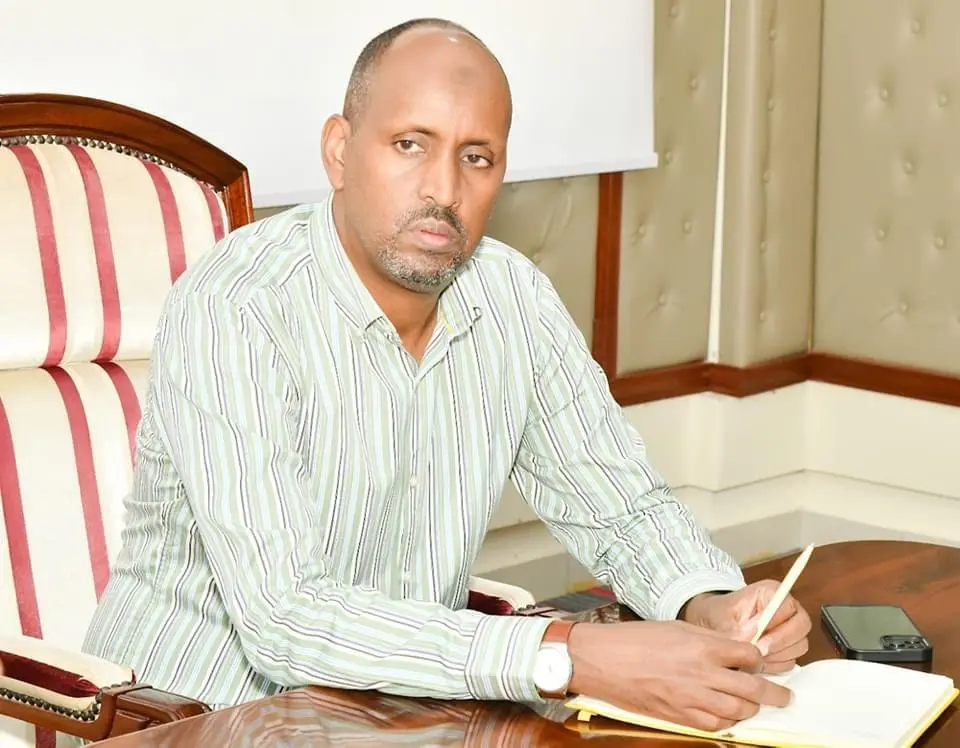
Garissa County Secretary Abdi Sheikh Mursal is facing allegations of possessing dual citizenship, which is against Kenyan law for public officials. Mursal is accused of holding both Kenyan and United Kingdom (UK) citizenship, and has been summoned by the Senate County Public Accounts and Investment Committee to provide evidence of his citizenship status.
Questions are also being raised over his actual names as it emerges that his two passports bare different names, on the UK passport, he’s using Hassan Youssuf Mohamud.
Mursal has denied the allegations and has vowed to defend himself in court if necessary.
Kenya Insights is informed that the matter has caused sharp divisions among Members of the County Assembly (MCAs) of Garissa who’re citing Article 78 (2) on Citizenship and Section 52 of the Leadership and Integrity Act of the Kenyan constitution 2010 that bar state officers from being holders of dual citizenship.
A source speaking to our writer intimates that the assembly is vested and probing to determine the validity of the claim and they’ll pursue his ouster should they find it affirmative.
If found guilty of possessing dual citizenship, he could be disqualified from holding public office and Garissa County could lose funds.
The issue of dual citizenship has become a contentious issue in Kenya, with many arguing that it should be allowed for those who want to hold citizenship in more than one country. However, the law currently prohibits public officials from holding dual citizenship, citing a conflict of interest.
Mr. Mursal alias ‘Nairobi’ was a pioneer county Secretary who served under Governor Nathif Jama during his first term. However, accusations have now been made that the appointment was flawed and that the EACC should do a follow up to the dual citizenship claims.
This controversy highlights the importance of the vetting process for public officials and the need for greater transparency and accountability in the selection of government officials. The public has a right to know the citizenship status of their elected officials and hold them accountable for any violations of the law.
Mohamud previously served as a District Officer (DO).
The case is similar to that of Kenya’s ambassador to South Korea Mwende Mwinzi.
When President Uhuru Kenyatta nominated her in May 2019 alongside other candidates for ambassadorial nominations the issue of her US nationality had not cropped up.
But the National Assembly, which approved her qualification, said she must renounce her second nationality before taking up the post.
The tug-of-war would reach the High Court. Ms Mwinzi sued the National Assembly, seeking to have MPs barred from forcing her to renounce a nationality she said was acquired without her control.
Born in Milwaukee, Wisconsin in the US, Ms Mwinzi, 52, told the court that being born of a Kenyan father and an American mother in the US meant she was technically a citizen by birth both in Kenya and in the US. She could not opt out.

Mwende Mwinzi.
In November 2019, she seemed to have scored victory after the High Court ruled that she cannot be forced to renounce her US citizenship as it was acquired by birth. But the same judge said Parliament was legally right to question her commitment to defending the country’s security interests, given the ambassador is the representative of the President abroad. Justice James Makau ruled that the court could not force the government to deploy her as her vetting process involved parliamentary approval.
“It is in the public interest that the process should be allowed to be completed,” the judge ruled then.
In his ruling, Justice Makau said the nominee falls within the category of Article 78(3)(b), which exempts persons who have been made citizens of another country by operation of that country’s law, without the ability to opt out.
All that time, the Foreign Affairs ministry had insisted she was not a diplomat yet.
Kenya’s Constitution does not list ambassadors or high commissioners among State officers, the category of public officers who must renounce their foreign nationality before taking up Kenyan government appointments.
The National Assembly, however, argued that the portfolio held by ambassadors demanded that they hold total allegiance to Kenya.
It remains to be seen how the situation with Mursal will be resolved, but it is clear that the issue of dual citizenship for public officials will continue to be a contentious issue in Kenya. Article 78 (2) on Citizenship and Section 52 of the Leadership and Integrity Act of the Kenyan constitution 2010 bars state officers from being holders of dual citizenship. The government will need to address this issue in a transparent and accountable manner in order to restore public trust and ensure that those who hold public office are in compliance with the law.
Kenya Insights allows guest blogging, if you want to be published on Kenya’s most authoritative and accurate blog, have an expose, news TIPS, story angles, human interest stories, drop us an email on [email protected] or via Telegram


Court Brands Sh1.1 Billion Fee Demand by Lawyer Victor Swanya “Excessive and Exorbitant,” Exposes How City Hall Lets Public Money Bleed Through Legal Bills

Trump Unveils New Air Force One

MR. NO SHOW: Finance Bill 2026 Exposes Ndindi Nyoro’s Political Conmanship

Billionaire Eric Muli Rebukes Musalia Mudavadi Over Nairobi Capital Relocation Debate

Lawyer Cliff Ombeta Warns Against Taking Insurance Cover With Old Mutual: “Talk to Me Before You Do, Their Imara Cover Is a Fraud”

My Life Is In Danger: Investor Drops Bombshell Expose On Thomas Ogutu CEO VeGrid Ltd And Fugitive Nairobi CEC Charles Kerich – DCI Inaction And Corruption Network Exposed

City Tycoon Chris Obure Returns To Senteu Plaza After Court Victory

NCBA’s Repossession Empire: How Borrowers Lose Their Cars While the Bank Profits at Every Step

Ex-First Lady Margaret Kenyatta and Siblings Move to Block Widow from Late Brother’s Sh50 Million Estate

Inside the Billion-Shilling Betrayal: How Senior Treasury Officials Plundered a UN Poverty Fund and Built a Real Estate Empire on the Backs of Kenya’s Rural Poor

Businessman Philip Waithaka Kinuthia’s Minor Son Allegedly Drove Drunk, Killed Two Peponi Students in Ngong Road Horror Crash as Claims of Cover-Up Intensify

Inside NCBA’s Decline: How a Banking Giant Lost Its Strategic Edge

Cement, Cash and Courts: How the Hashu Dynasty Crushed the Ramji Brothers for Fourteen Years and Why the Walls Are Now Closing In

Standard Chartered Ghosts Haunt Joshua Oigara At Stanbic As Whistleblower Spills Beans

Inside The Urban Planning Cartel That Owns Nairobi

South Sudan: Adut Salva Kiir’s Shadow Treasury Exposed

How Adil Popat Saved His Empire On The Eve Of Imperial Bank Collapse and Why Kenya’s Mainstream Media Buried The Story

Why John Ngumi Is Running From the EACC and Why the Sh415 Million Payday May Be the Least of His Worries

The President’s Daughter and The Missing Witness: How Adut Salva Kiir’s Shadow Treasury Silenced Its Most Dangerous Critic

Betika Faces DCI Probe, Directors Arrest and License Revocation Over Massive 29.5 Million Safaricom Customers’ Data Breach
-
 News5 days ago
Businessman Philip Waithaka Kinuthia’s Minor Son Allegedly Drove Drunk, Killed Two Peponi Students in Ngong Road Horror Crash as Claims of Cover-Up Intensify
-
 Business1 week ago
Inside NCBA’s Decline: How a Banking Giant Lost Its Strategic Edge
-
 Business1 week ago
Standard Chartered Ghosts Haunt Joshua Oigara At Stanbic As Whistleblower Spills Beans
-
 Africa1 week ago
South Sudan: Adut Salva Kiir’s Shadow Treasury Exposed
-
 Business1 week ago
How Adil Popat Saved His Empire On The Eve Of Imperial Bank Collapse and Why Kenya’s Mainstream Media Buried The Story
-
 Business1 week ago
Why John Ngumi Is Running From the EACC and Why the Sh415 Million Payday May Be the Least of His Worries
-
 Africa1 week ago
The President’s Daughter and The Missing Witness: How Adut Salva Kiir’s Shadow Treasury Silenced Its Most Dangerous Critic
-

 Investigations2 days ago
THE VULTURE AND THE SCHEME How Nairobi West Hospital Became the Most Dangerous Institution in Kenya’s SHA Ecosystem and Why the Books Must Be Audited Now