
Business
VANISHING ACT: How China Jiangxi International Pocketed Billions in Kenyan Public Contracts, Then Walked Away
A state-owned Chinese construction giant has turned the vanishing act into a business model, abandoning a Sh20 billion dam that communities waited six decades for, pocketing advance payments, billing for floors it never built and leaving a trail of audit flags, parliamentary contempt and shattered livelihoods across Kenya. This is the definitive dossier.

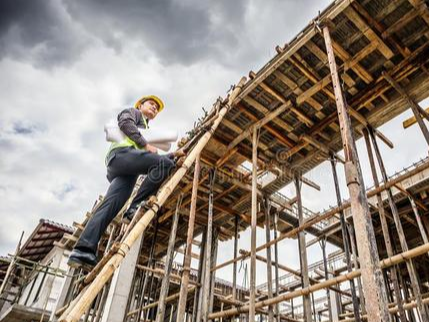
On August 27, 2022, the National Water Harvesting and Storage Authority handed China Jiangxi International Kenya Limited and its parent company, China Jiangxi International Economic and Cooperation Company Ltd, a contract worth Sh19.99 billion to construct the Soin-Koru Multipurpose Dam, a project that communities straddling the Kisumu and Kericho county border had been demanding since the 1960s.
The contract covered Lot One of the project: the dam component itself, a 54-metre-high zoned earth rock-fill structure that was to store 93.7 million cubic metres of water, irrigate 2,570 hectares of farmland, generate 2.5 megawatts of hydropower and end perennial flooding across the Nyando basin. Construction was to run for five years, concluding in August 2027.
The contractor received its mobilisation, moved equipment to the site and collected its fees. And then, as Kenya’s Auditor-General Nancy Gathungu would later confirm in an audit report covering the financial year ended June 2025, the contractor simply ceased to exist on the ground.
“The contractor is not on site,” Gathungu wrote, with the blunt economy of a public servant who has reviewed enough disaster to need few additional words.
That finding, contained in the official audit report of the National Water Harvesting and Storage Authority, is the latest and most damning entry in a documented pattern that spans more than a decade: China Jiangxi International Kenya Limited and its parent entity have accumulated some of the most lucrative public construction contracts in Kenya’s history, secured advance payments running into hundreds of millions of shillings per project, delivered work that in several cases falls catastrophically short of contracted scope, refused to refund unearned money, defied parliamentary summons, offered evasive testimony before National Assembly committees and walked away from sites leaving auditors, pensioners and communities to pick up the wreckage.
This investigation consolidates the full documented record for the first time. Every client of the Kenyan government that is considering engaging China Jiangxi International, and every procurement officer authorising further payments to the company or its joint venture partners, should read what follows.
“The contractor is not on site.” Auditor-General Nancy Gathungu, June 2025 audit report on the National Water Harvesting and Storage Authority.
THE DAM THAT WAS SUPPOSED TO END A 60-YEAR WAIT
The Soin-Koru dam sits at the intersection of Kisumu and Kericho counties, at a site along the Koru river that engineers first identified in the 1960s as ideal for a multipurpose water reservoir. More than sixty years of feasibility studies, environmental assessments, displaced hopes and aborted funding cycles passed before the Ruto administration moved the project forward in 2022. The dam was relaunched as one of the government’s flagship water security investments and listed among Vision 2030 infrastructure priorities. It was earmarked as key off-site infrastructure for the planned 1,000-acre Kisumu Special Economic Zone at Miwani. Communities in Kisumu City, Ahero, Chemelil, Miwani, Awasi, Muhoroni, Koitaburot, Koru and Rabuor were told their wait was over.
Approximately 1,200 residents were displaced from land that would be inundated. They gave up their homes, farms and ancestral grounds on the understanding that construction was imminent and irreversible. Construction activities formally commenced in 2023 following completion of the compensation process.
Nearly three years into a five-year contract, the physical reality on site is a study in near-total non-performance. The 54-metre dam itself has not been built. Diversion culverts, coffer dams, seepage control works, grouting, diaphragm walls, relief wells and laboratory testing facilities have not been started. Intake Tower B has not begun. River diversion works, road pavements, drainage structures, access roads, water abstraction facilities, hydropower infrastructure and security installations have not commenced. The resident engineer’s offices, laboratory and staff houses remain incomplete.
The only element that shows any physical activity is a side-channel spillway, comprising a concrete-lined chute and plunge pool, whose progress auditors estimated at approximately 15 percent. A spillway at 15 percent, everything else at zero, and the contractor absent from the site. That is where the flagship dam stands today.
China Jiangxi did not respond to questions submitted by text message to a company representative. The silence is a characteristic response, consistent with this firm’s approach to accountability across every project examined in this investigation.
THE ANATOMY OF A BUSINESS MODEL
To understand the Soin-Koru abandonment, it must be placed in context. China Jiangxi International Kenya Limited and its parent, China Jiangxi International Economic and Technical Cooperation Co. Ltd, a state-owned enterprise headquartered in Nanchang in Jiangxi province, China, have operated in Kenya for over a decade. The parent company was founded in 1983, has operated in more than 50 countries across Africa, Asia, Oceania and Latin America, and by its own account has delivered over 600 international contracting projects with a total contract value of approximately eight billion US dollars. In Kenya, its subsidiary registered as a locally incorporated company and has accumulated at least 14 completed government projects and at minimum five ongoing ones, according to testimony the company itself gave before Parliament’s Public Investments Committee in June 2024.
That accumulation of public contracts is precisely what raised alarm bells among legislators. Saboti MP Caleb Amisi put the question to company officials with striking directness during the June 2024 sitting of the PIC on Social Services, Administration and Agriculture: why has one single company been given all these multibillion tenders for these projects? Are there kickbacks being given to government officials? The company’s representatives did not provide a satisfactory answer. The session ended with the committee noting Jiangxi International’s inability to respond to the questions asked.
Reviewing the documented project portfolio reveals a remarkably consistent operational signature. China Jiangxi International Kenya Limited secures contracts through processes that have repeatedly attracted scrutiny, including instances of disqualification followed by re-tendering under modified conditions that favour the company. It collects mobilisation or advance payments. It commences work. It then, at varying rates of speed, either substantially underperforms against contracted scope, allows timelines to collapse, lodges large compensation claims for idle time or variations, reduces scope without proportionate cost reductions, or simply leaves. Throughout, it is resistant to refunding unearned money and strategically evasive when called before accountability forums.
“Why has one single company been given all these multibillion tenders for these projects? Are there kickbacks being given to government officials?” MP Caleb Amisi, Public Investments Committee, June 2024.
HAZINA TRADE CENTRE: THE BLUEPRINT FOR EVERYTHING THAT FOLLOWED
The Hazina Trade Centre project, commissioned in 2013, is the foundational case study in China Jiangxi’s Kenyan record. The National Social Security Fund, custodian of the retirement savings of millions of Kenyan workers, selected China Jiangxi International Kenya Limited to transform an existing building in Nairobi’s central business district into a 36-storey commercial tower at a contract value of Sh6.72 billion. The selection process itself was immediately contentious. The firm had initially been disqualified in the first tender. The fund re-advertised the project through a restricted tender floated afresh after the first process was annulled following an appeal by two Chinese firms. Cementers Limited, the company that won the initial tender, later told the PIC that the fund had changed conditions in the new tender to favour Chinese contractors.
The project lurched forward for years under a cloud of disputes, court challenges and audit queries. Then, with the building at 15 floors, construction stopped. China Jiangxi justified the halt by citing structural concerns about whether the existing building’s foundations could support the full 36-storey height. The scope was formally revised downward to 15 floors and the contract value reduced from Sh6.72 billion to Sh4.1 billion. But as the Auditor-General’s report for the financial years 2019-20 and 2020-21 later revealed, the reduction in scope was 58 percent while the reduction in contract price was only 39 percent. Twenty-one floors removed; Sh2.62 billion off the price. The committee chair MP Emmanuel Wangwe captured the absurdity with precision: what made the construction of 15 floors more expensive than the cost of the initial 21 floors? Even if there were variations, it cannot be 100 percent.
The damage did not end with the scope reduction. The Auditor-General further revealed that China Jiangxi had submitted compensation claims of Sh871.7 million for idle time attributable to construction stoppages. NSSF paid out Sh653.8 million of that claim. A project delivered at less than half its contracted size, with the client paying hundreds of millions in idle time fees, no clear paperwork justifying the variation, and a contractor whose managing director appeared before Parliament and was described by committee members as presenting documents that were nothing but jokers. When asked whether he was even a genuine company official, Jimmy Ji could not convincingly reassure the lawmakers.
By the time of PIC hearings in April 2024, it was further revealed that China Jiangxi had demanded an additional Sh6.88 billion from NSSF through its project managers, which, if honoured, would put the cost of building 15 floors at over Sh13 billion, more than double the original contract to build 36. The Department of Public Works, brought in as new project managers, called the claim mind-boggling. As of the most recent audit covering the period through June 2025, work on the building was still incomplete, construction was ongoing on some floors, and the lift did not function.
NYAYO EMBAKASI: ADVANCE PAYMENT, 44 UNITS, NO REFUND
The Hazina Trade Centre was not the only NSSF project awarded to China Jiangxi. The fund also gave the company a Sh2.2 billion contract for the construction of 324 housing units at Nyayo Estate, Embakasi Phase VI, to run from June 2, 2013 to November 30, 2014. NSSF advanced the contractor Sh215.5 million in mobilisation fees, secured by a Standard Chartered Bank guarantee. The guarantee expired in September 2015. As at March 2018, four years after the contracted completion date, only 44 of the 324 units had been constructed. Work had stopped. The fund requested the contractor refund the mobilisation advance. China Jiangxi declined.
The company’s response to the refund demand, as reported before the PIC in 2024, was that repayment would depend on the final settlement of the project account, including completed work, contractual claims and incurred expenses. The most recent audit report covering the period through October 2025 confirms that of the Sh215.5 million mobilisation fee and a further overpayment of Sh168.8 million identified by the auditor against certified works, no refund had been made. Twelve years after the contracted completion date, 280 units remain unbuilt and hundreds of millions remain unreturned. NSSF, the pension fund of ordinary Kenyan workers, continues to carry the loss.
The same Ernst and Young audit report commissioned by COTU-Kenya in 2016 flagged irregularities in the procurement of the Nyayo project, including the advance payment of Sh215.5 million without NSSF Board approval and procurement of the contractor before access to the plots had been secured.
BUNGE TOWER: A DECADE, A COST BLOWOUT AND CRACKS IN THE WALLS
China Jiangxi International Kenya Limited also constructed Bunge Tower, the 26-storey parliamentary office building that sits between Continental House and County Hall adjacent to Parliament in Nairobi. The project was initiated by the Parliamentary Service Commission in 2010 and construction started in March 2014 with a contracted value of Sh5.89 billion and a 42-month completion period, meaning it should have been done by 2017.
It was not delivered until 2024, a delay of approximately seven years. By the time MPs moved in, the contract value had escalated to Sh7.1 billion, with financial claims attracting an additional Sh1.1 billion and Sh225.2 million in interest on delayed payments. The initial contract period had been extended three times. When MPs finally occupied the building in April 2024, Senator Samson Cherargei reported that construction was still ongoing on some floors, the lift did not work and some offices lacked windows. Other legislators complained of poor ventilation, inadequate natural lighting and erratic mobile phone networks from the 21st floor upward.
The project had also drawn the attention of the Ethics and Anti-Corruption Commission, which sent investigators to the site in 2021 following findings in the Auditor-General’s report for 2019-20. The EACC was interested in, among other concerns, a 27 percent contract variation when the law capped variations at 25 percent, slow progress that had stalled a sub-contractor already paid 70 percent of his sub-contract value, and the fact that 14 sub-contractors had been handed over to China Jiangxi without clear documentation of ownership. The PSC at that point still did not hold a title deed to the land on which the tower stood.
China Jiangxi had also challenged the award of a Sh700 million interior fitting sub-contract to Nightingale Enterprises Limited, filing a petition to the Public Procurement Administrative Review Board claiming the winning firm had used forged documents. Nightingale was awarded the contract regardless.
“Jiangxi International Limited Kenya’s inability to provide satisfactory responses led to the premature adjournment of the session.” Public Investments Committee, Parliament of Kenya, June 2024.
UMAA DAM, KITUI: THE THIRD WATER PROJECT IN TROUBLE
The Soin-Koru dam is not the only water infrastructure project assigned to China Jiangxi that has attracted audit concerns under the current administration. The Auditor-General has separately flagged delays in the Sh1.96 billion Umaa Dam Water Supply and Irrigation Project in Kitui County, being implemented by a joint venture involving China Jiangxi International Economic and Technical Cooperation Company Ltd and Vanqo Roads and Engineering Ltd. NWHSA contracted the firm to complete the dam, which had first stalled in 2009 following a dispute with the original contractor, at a cost of Sh1.9 billion. The firm moved to site in January 2024 with a two-year completion timeline. That timeline has already been questioned by the auditor. Kitui’s governor had publicly declared the county would not allow the dam to stall again. That declaration now stands as a hostage to fortune.
THE PATTERN THAT PROCUREMENT OFFICERS MUST RECOGNISE
A forensic review of the documented record reveals at least six recurring characteristics in China Jiangxi International Kenya Limited’s engagement with Kenyan public contracts.
The first is contested procurement origin. The Hazina Trade Centre was awarded through a restricted tender after the company was disqualified in the first open process and the tender re-advertised. The Parliament Tower contract attracted a tender dispute petition by a competitor claiming the procurement was in breach of the law and that it favoured China Jiangxi over the lowest bidder by Sh245.6 million. These are not one-off anomalies.
The second is advance payment capture. Mobilisation or advance payments are collected at the outset of each contract. When projects stall, those advances are not returned. The Nyayo Estate Embakasi case is the starkest illustration: Sh215.5 million advanced, work at 13.6 percent of contracted units after the completion deadline passed, refund refused for over a decade and counting.
The third is scope reduction without proportionate price reduction. At Hazina Trade Centre, 58 percent of the floors were removed but only 39 percent of the contract price was reduced. The contractor then submitted compensation claims for idle time that further eroded the value differential, leaving the client paying for something approaching the original price for less than half the original product.
The fourth is compensation claims for contractor-attributable delays or idle time. At Hazina, claims of Sh871.7 million were lodged and Sh653.8 million was paid. At Bunge Tower, financial claims added Sh1.1 billion to the contract value and interest on delayed payments added a further Sh225.2 million. These claims are a systematic instrument for extracting additional public money after performance has faltered.
The fifth is evasion of parliamentary accountability. When Jimmy Ji appeared before the PIC in April 2024, committee members publicly doubted whether he was a genuine company official. The documentation he submitted was described as inadequate. The session was adjourned because the company could not respond to the questions asked. This is not an isolated outcome; it is the company’s consistent posture before oversight bodies.
The sixth is site abandonment. The Soin-Koru dam represents the most extreme manifestation: auditors arriving at a flagship national project site and finding no contractor at all.
THE HUMAN COST THAT NEITHER THE COMPANY NOR ITS CLIENTS ACCOUNT FOR
Behind every audit flag is a community bearing a cost that accountants do not capture. Approximately 1,200 families were displaced from the Soin-Koru dam site. They surrendered their land in exchange for a promise that the dam would be built. It has not been. They remain in limbo, unable to return to land that has been designated for inundation and unable to benefit from infrastructure that has not materialised.
The farmers of the Nyando basin continue to suffer the perennial flooding that the dam was designed to control. The communities that were promised 72,000 cubic metres of reliable daily water supply and 2,570 hectares of irrigated farmland have received neither. The Kisumu Special Economic Zone loses a critical infrastructure anchor. Vision 2030 loses another flagged timeline.
NSSF members, most of them low-income formal sector workers, are carrying the financial residue of Sh215.5 million in unrecovered mobilisation fees on a housing project that delivered 44 units out of 324 contracted, plus an overpayment of Sh168.8 million that the contractor has not refunded more than a decade after the contracted completion date.
In the courts, former workers have pursued China Jiangxi through Kenya’s Employment and Labour Relations Court in case after case. The court record documents workers dismissed without notice, without hearing and without terminal benefits, workers denied NSSF remittances, and workers who reported to the Labour Department only to find the company ignoring even the Ministry’s demand letters.
WHAT THE PROCURING ENTITIES MUST ANSWER
The National Water Harvesting and Storage Authority must now provide a complete accounting of every payment made to China Jiangxi International Kenya Limited against the Soin-Koru contract. Specifically, the authority must disclose the total amount disbursed in mobilisation advances, interim payment certificates and any other payments; the independently verified physical progress against each payment; the site supervision records and milestone verification procedures that were in place during the period the auditor found the contractor absent; and the status of performance bonds and guarantees, including whether trigger conditions have been met and whether those instruments have been called.
The authority must also explain why a contractor carrying this documented track record across at least three major public projects was awarded a Sh19.99 billion flagship contract without enhanced performance securities, tighter milestone verification requirements or escalated exit mechanisms. Standard procurement due diligence should have surfaced the Nyayo Estate refusal, the Hazina Trade Centre scope-reduction dispute and the Bunge Tower delays before a single shilling was committed. If that due diligence was conducted and the contract was still awarded without protections, the authority owes Parliament and the public an explanation of that judgement.
THE ACCOUNTABILITY ACTIONS THAT MUST FOLLOW NOW
Parliament’s Public Investments Committee and the relevant water, public works and treasury sectoral committees must summon the NWHSA Director General, the Chief Executive of NSSF, the accounting officer of the Parliamentary Service Commission, the Managing Director of China Jiangxi International Kenya Limited and the senior representative of the parent company, China Jiangxi International Economic and Technical Cooperation Co. Ltd, for a comprehensive joint sitting. The agenda must include a forensic reconciliation of every payment certificate against certified physical works and dated site photographs across all active and recently completed contracts; the status of all outstanding refund demands; the current position on performance bonds across every live project; and the proposed enforcement actions.
The Public Procurement Regulatory Authority should initiate an immediate review of the procurement processes through which China Jiangxi International Kenya Limited was awarded its portfolio of Kenyan public contracts, including the Hazina Trade Centre restricted tender, the Parliament Tower procurement challenge and the Soin-Koru award, with a view to determining whether systemic irregularities exist in the awarding pattern.
The Director of Public Prosecutions and the Ethics and Anti-Corruption Commission, which has previously sent investigators to the Bunge Tower site, should be formally petitioned to consider whether the documented pattern of advance payment retention, scope reduction without proportionate price reduction, compensation claims for non-performance and sustained refusal to return public money constitutes conduct warranting criminal investigation.
Performance bonds must be called immediately wherever contractual trigger conditions have been met. Termination for non-performance must be considered for Soin-Koru, with debarment from future public tenders as an immediate accompanying sanction. The PPRA should place the company on a watch list pending completion of the review, with all new contract awards suspended.
A NOTE ON STATE OWNERSHIP AND DIPLOMATIC DIMENSIONS
China Jiangxi International Economic and Technical Cooperation Co. Ltd is not a private contractor operating independently in the market. It is a state-owned enterprise of the People’s Republic of China, headquartered in Nanchang and supervised by the state. Its subsidiary registered in Kenya operates as the vehicle for a parent entity whose conduct is ultimately attributable to the institutions of the Chinese state. That distinction matters when Kenya’s government considers what accountability mechanisms to engage. Diplomatic channels are available alongside legal and procurement remedies, and the government of Kenya has both the right and the obligation to deploy them when a state-owned enterprise of a partner country abandons flagship national infrastructure projects while retaining public funds.
The government of China frequently emphasises its commitment to mutually beneficial infrastructure partnerships in Africa. The record of China Jiangxi International Kenya Limited as documented across Hazina Trade Centre, Nyayo Embakasi, Bunge Tower, the Umaa Dam and now the Soin-Koru dam is not consistent with that stated commitment. It is consistent with a pattern of profit extraction with inadequate delivery. Kenya’s government should make this representation to Beijing directly and formally, in parallel with domestic accountability proceedings.
CONCLUSION: THE CONTRACTOR MAY BE ABSENT. ACCOUNTABILITY CANNOT BE.
The Auditor-General’s finding that the contractor is not on site at the Soin-Koru dam is four words that should produce an immediate, multi-agency accountability response. They have not yet done so. The Business Daily’s reporting of the finding on June 7, 2026 appears, so far, to have been met with institutional silence from the procuring entity and the contractor alike.
The communities of the Nyando basin are still waiting for the dam their grandparents first petitioned for in the 1960s. The workers displaced from its site are still waiting for the infrastructure that was the justification for their displacement. The pensioners of NSSF are still waiting for a refund from a housing project that ended in 2014 without completion. The MPs of Kenya are occupying a building whose lift did not work when they moved in and whose walls Senator Cherargei told Parliament were already developing cracks.
China Jiangxi International Kenya Limited has demonstrated across a twelve-year, multi-project record that it can absorb public money, deliver partial performance, deflect accountability and continue operating without consequences. That cycle will repeat at the Soin-Koru dam unless the National Water Harvesting and Storage Authority, the Public Investments Committee, the PPRA, the EACC and the DPP act in concert and without delay.
The contractor may be absent from the dam site. The question Kenya must now answer is whether the institutions responsible for protecting public money will also remain absent, or whether this time, finally, the consequences will arrive before the next contract is awarded.
Kenya Insights allows guest blogging, if you want to be published on Kenya’s most authoritative and accurate blog, have an expose, news TIPS, story angles, human interest stories, drop us an email on [email protected] or via Telegram


The Conquest of Tatu City, A New Zealander Story

VANISHING ACT: How China Jiangxi International Pocketed Billions in Kenyan Public Contracts, Then Walked Away

THE GROUP CHAT THAT BROKE THE CARTEL: How Kenya’s Biggest Mattress Firms Used WhatsApp to Fix Your Prices, Then Used It to Destroy Themselves

Court Upholds Gachagua Impeachment, Awards Him Sh50M In Constitutional Damages To Be Paid By Senate

Somali FIFA Referee Denied Entry To US Ahead Of 2026 World Cup: Reports

David Maraga: Kenya’s Ex-Chief Justice Arrested At Protest Against Building On National Park

KRA Warns It Will Automatically File Tax Returns for Kenyans Who Miss June 30 Deadline Using Its Own Data

Govt Plans to Monetise eCitizen Data in New Revenue Drive

Dennis Onyango: Why Raila Won Elections But Never Became President

Israel, Iran Trade Fire Despite Trump’s Call For Restraint

Cement, Cash and Courts: How the Hashu Dynasty Crushed the Ramji Brothers for Fourteen Years and Why the Walls Are Now Closing In

Inside The Urban Planning Cartel That Owns Nairobi

Why Ruto’s Favourite Candidate Adan Mohammed Could Be Locked Out of the KRA Top Job

LifeCare on the Brink: SHA Fraud, Stolen Wages, and the Rotten Empire Jayesh Saini Built

Este Medical Kenya Fights American’s Explosive Complaints

The Rot Inside Absa: How Bank Insiders Are Looting Nairobi’s Customers

Betika Faces DCI Probe, Directors Arrest and License Revocation Over Massive 29.5 Million Safaricom Customers’ Data Breach

Inside FAFSA Fraud: How Kenyan Cybercriminals Siphoned Millions from America’s Sh12 Billion Student Loan System

Fresh Move Launched to Remove Kenya Railways MD Mainga From Office After Awarding Sh817 Million Consultancy Contract

Court Confirms Safaricom Customers Data Was Sold To Betting Companies In Seven-Year Cover-Up
-
 Investigations4 days ago
Cement, Cash and Courts: How the Hashu Dynasty Crushed the Ramji Brothers for Fourteen Years and Why the Walls Are Now Closing In
-
 Investigations3 days ago
Inside The Urban Planning Cartel That Owns Nairobi
-
 Investigations2 weeks ago
LifeCare on the Brink: SHA Fraud, Stolen Wages, and the Rotten Empire Jayesh Saini Built
-
 Investigations1 week ago
Betika Faces DCI Probe, Directors Arrest and License Revocation Over Massive 29.5 Million Safaricom Customers’ Data Breach
-
 Investigations4 days ago
Fresh Move Launched to Remove Kenya Railways MD Mainga From Office After Awarding Sh817 Million Consultancy Contract
-

 News2 weeks ago
Eight Students Arrested In Kenya After Suspected Deadly School Arson Attack
-
 News1 week ago
How Uhuru’s Deal With Obama In 2015 Paved Way For America’s Ebola Plan In Kenya
-

 Investigations2 weeks ago
The Invisible Hand: Al Jazeera Further Exposes How Safaricom Became The Regime’s Most Powerful Spy