
Investigations
SH2 BILLION HEIST EXPOSED: How Tatu City’s Foreign Masters Used Dirty Offshore Traps, London Arbitration & Mauritius Liquidation to Strip Local Investors of Their Stake
How Tatu City’s Foreign Masters Used Dirty Offshore Traps, London Arbitration and Mauritius Liquidation to Strip Vimal Shah, Ex-CBK Governor Nyagah and Mwagiru of Their Stake and How a $340 Million Counter-Claim Was Buried in the Process

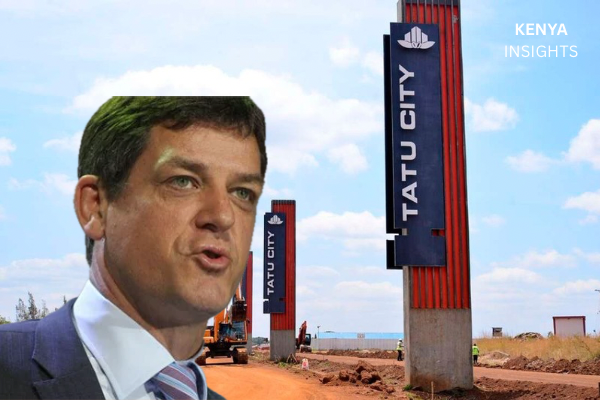
The Privy Council in London closed the last door on May 14, 2026. Five judges their judgment delivered by Lord Richards dismissed the final appeals of Stephen Mbugua Mwagiru and confirmed what had been grinding toward conclusion for nearly a decade: the offshore company through which Vimal Shah, former Central Bank of Kenya Governor Nahashon Nyagah, and Mwagiru had staked their claim to a piece of the Sh240 billion Tatu City Special Economic Zone was in liquidation, its shares were headed to auction, and no director had the legal standing to stop it.
The Business Daily covered the ruling. The Standard covered the ruling. They named the parties, cited the Privy Council case number Manhattan Coffee Investment Holding (in liquidation) v Mwagiru [2026] UKPC 21 and noted that the Kenyan investors had lost. What none of them adequately explained is the full architecture of how that loss was manufactured: the offshore trap laid years in advance, the retrospectively inflated interest rates that drained the project’s cash before anyone could object, the unilateral dilution of the Kenyan partners from majority to minority positions that was itself worth $340 million in a counter-claim the liquidators chose to bury, the tax evasion scheme that investigators say stripped Kenya of billions in stamp duty, and the methodical use of procedural finality a missed 28-day window to convert a disputed arbitration award into a liquidation order into an ownership transfer.
This is the story that Stephen Jennings does not want told. Kenya Insights has spent time reconstructing it from court records across four jurisdictions, parliamentary testimony, EACC and DCI investigative filings, KRA demand notices, and financial disclosures. It is not a story of innocent foreign capital defeated by corrupt locals. It is not a story of fraudulent local partners getting what they deserved. It is something more complex and considerably more disturbing: a story of how the architecture of offshore investment vehicles, when controlled by whoever has the deepest pockets and the most aggressive lawyers, can be weaponized to strip a national asset of its Kenyan ownership while the developer wraps himself in the language of progress.
Manhattan Coffee had a live $340 million claim in Mauritius alleging that Rendeavour’s SCF Holdings had illegally diluted the Kenyan investors from majority to minority positions. The liquidators appointed by SCF’s winding-up petition declined to pursue it. Then the shares were put up for sale.
I. THE MAN WHO ARRIVED IN NAIROBI WITH $272 MILLION IN DEBTS
Any serious due diligence on Stephen Jennings and his Rendeavour machine has to begin in Moscow in November 2012, because that is where the pressure that arrived in Kenya was generated.
Jennings founded Renaissance Capital in 1995 amid the financial anarchy of post-Soviet Russia, advising on the mass privatisations through which state assets were transferred into private hands at prices that bore almost no relationship to their real value — a methodology whose fingerprints would later appear, with notable creativity, in Tatu City’s land pricing arrangements. By the 2000s, RenCap was the dominant investment bank straddling Russia and sub-Saharan Africa. Then three consecutive years of losses triggered a Moody’s credit downgrade. Jennings needed capital. He found himself at a Moscow dinner table facing oligarch Suleiman Kerimov and his partner Mikhail Prokhorov, who had paid $500 million for half of RenCap in 2008. Jennings requested more money to cover the bleeding. Kerimov, according to multiple accounts in international financial media at the time, accused him of mismanaging the funds entrusted to him. Prokhorov demanded surrender of Jennings’ 50 percent stake plus one share.
What happened next has entered the folklore of Moscow banking. RenCap sources told Bne IntelliNews that Jennings, then 52, faked a heart attack. An ambulance was called. The driver was paid handsomely to bypass the hospital and divert to Sheremetyevo Airport. Jennings flew to London. He has not returned to Russia. He eventually signed the surrender papers, ceding Renaissance Capital and consumer lender RenCredit to Prokhorov’s Onexim Group, while retaining ownership of the African-focused Renaissance Group. The catch: that entity had documented debts of $272 million that it could not service without restructuring, according to Vedomosti’s reporting on the management presentation. Of that total, $93 million was owed directly to Prokhorov. A separate accounting of the group’s total obligations placed them at $650 million against accumulated losses exceeding $100 million.
This is the financial condition of the man who, simultaneously, was marketing himself to the Kibaki government, to institutional investors from New Zealand, Norway, the United Kingdom, and the United States, and to Kenyan business elites as the visionary architect of Africa’s satellite city revolution. Rendeavour needed African real estate to generate cash and to generate it fast. Tatu City was the largest and most immediate opportunity on the continent. How urgently it was needed would only become apparent later, when the internal loan accounts were finally examined.
II. THE DEAL THAT WAS NEVER EQUAL FROM DAY ONE
In 2007, Vimal Shah chairman of the Bidco Africa cooking oils empire along with former CBK Governor Nahashon Nyagah and coffee farmer Stephen Mwagiru identified the crown jewel: the sprawling Socfinaf coffee and rubber estates in Kiambu County, roughly 13,600 acres that the newly planned Thika Superhighway would shortly make the most strategically valuable undeveloped land in East Africa. They had the connections to the land and to the Kibaki government’s infrastructure ambitions. They did not have the money for a deposit.
Jennings, still at Renaissance Capital and already circling African real estate plays, stepped in. Renaissance paid $21.7 million for the Tatu City land core and $65.7 million for the broader Kofinaf coffee estates. The Kenyan trio contributed no capital. Rendeavour advanced them $9.9 million later described in various filings as approximately $11 million including related costs to subscribe for their share of Cedar IV, structured as a loan. Finder’s fees of approximately $500,000 were separately recorded. In Rendeavour’s public narrative, this proves the locals brought nothing. In any honest structural analysis, it means Jennings chose from the very first transaction to finance the local partners’ entry on terms that created leverage he would later exercise with precision: the ability to call in debt, inflate interest rates, and squeeze shareholdings.
The corporate architecture installed around the deal was the second trap. Cedar IV (Mauritius) became the 99.9 percent owner of Tatu City Limited Kenya. Cedar IV sat under two entities: SCFE II (Cyprus), controlled by Jennings’ Rendeavour, and Manhattan Coffee Investment Holdings (Mauritius), the local partners’ vehicle. Manhattan itself was owned equally by Redline Investments Corporation (linked to Shah) and Blacknight Holdings (linked to Nyagah and Mwagiru). All shareholder dispute mechanisms were routed to English law and the London Court of International Arbitration. Kenyan courts were contractually excluded from jurisdiction over any offshore-layer dispute meaning that whenever the local partners tried to use Nairobi’s courts for relief, they were told the courts had no power to hear them.
Justice Daniel Musinga had to acknowledge this design explicitly in his 2010 ruling on the Mwagiru and his mother Rosemary Wanja’s petition: while accepting the petitioners had demonstrated ownership of some shares in Tatu City through the offshore companies, the judge held that Kenyan courts lacked jurisdiction to determine shareholding disputes in those firms because the parties had agreed that such disputes would be resolved under English law. The offshore architecture had successfully quarantined Kenyan judicial oversight from the moment the project began.
By end of 2014, a loan of Sh6.2 billion had ballooned to Sh9.4 billion through an interest rate of 33 percent per year applied retrospectively without the knowledge of the other investors. Ten land sales totalling Sh7.5 billion had already been absorbed. Every shilling went offshore.
III. THE LOAN THAT CONSUMED EVERYTHING AND THE DILUTION THAT FOLLOWED
The financial mechanism by which Jennings stripped the project of its cash whatever the London arbitration later found about the Kenyans’ misrepresentations regarding the deposit represents its own remarkable piece of financial engineering whose full dimensions have never been adequately reported in the mainstream press.
According to accounts prepared by Jennings himself and later tabled in court proceedings, a loan of Sh6.2 billion extended to the Tatu City project had, by end of 2014, ballooned to Sh9.4 billion. The mechanism was an interest rate of 33 percent per year, applied retrospectively to 2011, the year the loan was originally disbursed. This retroactive rate was imposed without the knowledge or consent of the other investors. The full board including Shah, Nyagah, and Mwagiru was presented with a fait accompli. The cash register had already been rung.
By 2014, the sale of ten Tatu City plots had generated Sh7.5 billion in revenue. Every shilling had gone to service the loan which was still growing. Shah, Nyagah, and Mwagiru opposed a further land sale tabled in January 2015, arguing that the loan had been repaid in full and that another distressed disposal would permanently damage the project’s value. Jennings overruled them. He had, by this point, unilaterally diluted the local partners’ shareholding and increased his own, providing him a board majority to pass any motion without their consent. A further tranche was sold for Sh4.8 billion. That money also disappeared into Renaissance Partners’ offshore accounts. Nyagah would later tell the National Assembly Lands Committee that the project had overpaid Renaissance Sh2 billion for the loan advanced to facilitate the land purchase — money that, in his submission, had gone straight offshore with no accounting to the Kenyan shareholders.
Then came the boardroom coup. In February 2015, Jennings removed Nyagah as company chairman, replacing him with coffee baron Pius Ngugi. All senior Tatu City Limited management aligned with the local partners was expelled. Mwagiru had already been pushed out as CEO of the coffee operations years earlier. The Kenyan investors were now, in practical terms, voiceless in the management of a project to which they had introduced the land, the political connections, and — through the finder’s fee and the very structure of the deal — their credibility as local partners.
It is against this backdrop the retrospective interest rate, the unilateral dilution, the board coup, the Sh9.4 billion loan that had absorbed all revenues that the Manhattan Coffee team in 2017 filed what may be the most under-reported legal action in this entire saga. In March 2017, Manhattan Coffee lodged a plaint in the Supreme Court of Mauritius seeking the annulment of share issues in the Cedar companies which, it alleged, had unlawfully diluted its own shareholdings from 46.5 percent to 14.5 percent in Cedar IV and from 51.2 percent to 14.6 percent in the sister company a dilution that had reduced the Kenyan partners from a combined majority position to a thin minority. The claim was for annulment of those share issues, or alternatively damages of $340 million.
This claim has been almost entirely invisible in the English-language coverage of Tatu City. It is critical to understanding everything that followed. Because when the Mauritius liquidators were appointed in 2023 following the winding-up order obtained by SCF Holdings on the strength of the arbitration debt, one of the first decisions those liquidators made was to decline to pursue the $340 million annulment plaint. The liquidators then advertised Manhattan Coffee’s Cedar shareholdings for sale in October 2023, with bids due by November 27. Mwagiru’s desperate November 2023 court applications which were ultimately dismissed by the Privy Council were driven precisely by his concern that SCF Holdings would purchase those shares at the diluted minority valuations and set off the arbitration debt against the purchase price, locking in a structure in which the Kenyan partners’ entire stake was eliminated through a debt-for-equity conversion at distressed prices.
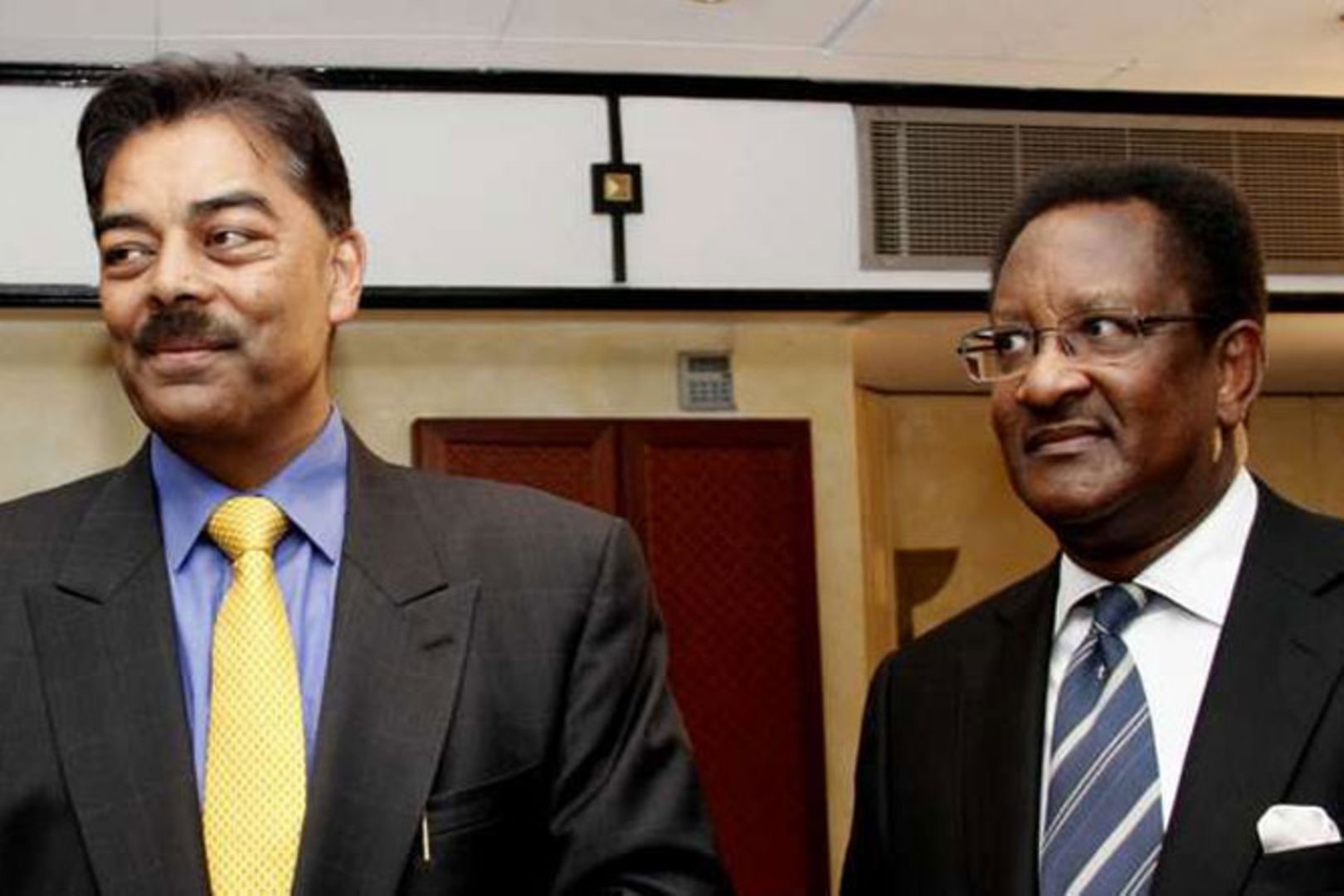
Vimal and Nyagah
IV. THE LONDON ARBITRATION WHAT THE AWARD ACTUALLY PROVES AND WHAT IT DOES NOT
The February 2018 LCIA award 127 pages by sole arbitrator Simon Nesbitt QC has been deployed by Rendeavour’s communications operation as the definitive verdict on the entire Tatu City dispute: fraudulent locals, righteous foreign investor, case closed. A careful reading is more nuanced than the press releases suggest, and the structural context in which the award was obtained matters enormously.
The core finding was this: Manhattan Coffee Investment Holdings had repeatedly represented to SCF Holdings II that a $20 million deposit payment had been made to the Socfinaf land sellers when it had not. The arbitrator found this was a fraudulent misrepresentation that affected Jennings’ investment strategy. Manhattan Coffee was ordered to pay SCF nearly $15 million plus interest from 2008 and costs a total approaching $17 million. The arbitrator also noted that part of Vimal Shah’s testimony was insufficiently consistent with the documentary evidence. On Mwagiru specifically, the arbitrator found he had made false representations knowing them to be false or without any belief in their truth.
What receives no coverage in the Rendeavour narrative is the arbitration’s context. The proceedings were launched in June 2015 after Jennings had already unilaterally diluted the Kenyan partners’ shareholding, expelled their management, replaced the chairman, and absorbed Sh7.5 billion in land sale revenues into offshore accounts through a retrospectively inflated loan. The Kenyan partners were fighting from a position of having already been stripped of board control and cash flow information before the arbitration ever started. Whether the $20 million deposit misrepresentation was a calculated fraud or an optimistic representation in a chaotic multi-party land acquisition gone wrong is a question the arbitration decided on the record before it — a record in which the Kenyan side were defending themselves in a London forum they had no access to at the same costs.
The procedural kill shot was the 28-day window. Under LCIA rules and the applicable enforcement regime, a party wishing to challenge or set aside an arbitration award must do so within 28 days of receiving it. Shah, Nyagah, and Mwagiru’s vehicle did not mount a challenge within that window. They later applied to the Mauritius courts to set aside the award, and that application was rejected. The award became final and enforceable as a matter of law not because any court examined and validated every aspect of Jennings’ conduct in the underlying dispute, but because a procedural deadline was missed.
Jennings did not need to relitigate anything after that. He moved to Mauritius with a final award in hand and petitioned to wind up Manhattan Coffee. The winding-up petition was presented in February 2019. A provisional liquidator was appointed. The compulsory winding-up order followed in May 2023. The $340 million counter-claim was abandoned. The Cedar shares went to auction.
The EACC found evidence that a piece of land sold for Sh748 million was transferred through a chain of related entities and ultimately disposed of at market value of Sh4 billion. The KRA collected stamp duty on Sh748 million. The remaining Sh3.25 billion in value vanished offshore, untaxed.
V. THE TAX MACHINE HOW RENDEAVOUR ALLEGEDLY STOLE FROM KENYA’S TREASURY
While the shareholder war was consuming the courts, a parallel financial story was developing that went far beyond any dispute between the project’s partners. Kenya’s regulatory and law enforcement agencies — the Kenya Revenue Authority, the Ethics and Anti-Corruption Commission, and ultimately the Directorate of Criminal Investigations — began piecing together evidence of what they characterised as a systematic scheme to strip billions of shillings from the national tax base.
The scheme, as described in EACC court filings and confirmed in broad terms by High Court Justice Esther Maina in her 2022 ruling that allowed the EACC probe to continue, operated through a methodology the EACC identified as a loan back scheme combined with a stamp duty avoidance carousel. A Tatu City or Kofinaf affiliate would acquire land from a related company at a dramatically understated price, lowering the stamp duty payable on the transaction. The land was then transferred into a freshly incorporated special purpose vehicle — companies such as Purple Saturn Properties appeared in the EACC documents. Ninety-nine point nine percent of that SPV’s shares was then transferred to a Mauritius-registered entity. That Mauritius entity would sell the parcel to the ultimate buyer at full market value. Because the final transaction was structured as a share transfer rather than a direct land transfer, it attracted stamp duty of one percent rather than the four percent applicable to direct land sales.
The documentary evidence tabled before the National Assembly Lands Committee was explicit. Official KRA and Ministry of Lands records attached to Mwagiru’s affidavit showed that land purchased for Sh1.19 billion had been declared to tax authorities at Sh340 million for stamp duty purposes. A separate parcel bought at Sh884 million was declared at Sh219 million. In one case cited by the EACC, a property sold for Sh748 million was transferred through a local firm to a foreign entity, which disposed of it locally at market value of Sh4 billion. The KRA collected stamp duty on Sh748 million. The Sh3.25 billion difference in value moved offshore, untaxed.
The EACC named Stephen Jennings and then-country head Chris Barron as persons of interest. High Court Justice Esther Maina stated explicitly in her April 2022 ruling that the matters being investigated transcend the dispute between the individual shareholders and revolve around the commission of the offences of tax evasion and money laundering. The KRA issued a demand notice in October 2018 for Sh1.35 billion in tax arrears and accrued interest from Tatu City directors and Kofinaf, placing restrictions on further land transactions until the amount was cleared. Kofinaf has fought the KRA at every level. The Tax Appeals Tribunal dismissed its challenge in April 2024. It has appealed to the High Court, with the original principal, interest, and penalties having accumulated to Sh656.7 million on that single tranche.
In December 2024, Magistrate Kiage granted the DCI warrants to seize documents from Tatu City, Kofinaf, and their law firm Lutta and Company Advocates. The court explicitly ruled that advocate-client privilege cannot shield documents from a criminal investigation where there is reasonable suspicion the documents were used to facilitate crime. The DCI’s working theory, according to its court filings, is that Tatu City affiliates systematically acquire land from related companies at a fraction of market value to lower tax liability, then offshore the difference through corporate SPV chains. The EACC additionally identified a loan back money laundering dimension in which paper transactions between related entities created artificial debt structures to conceal the real ownership and destination of funds.
Rendeavour’s response to these investigations has been consistent and instructive. When Nation Africa‘s reporters put the substance of the probes to Preston Mendenhall, the COO and Kenya country head, he described the questions as quite old material covered ad nauseam with no proof whatsoever. In 2015, at the TatuTrueTalk public event at the Louis Leakey Auditorium, Jennings himself told his audience that the immigration interrogations of Rendeavour staff over work permits were his first experience in 25 years across 35 emerging markets of that form of cheap harassment. The courts have repeatedly, across six years of litigation by Rendeavour to shut down the probes, declined to treat the investigations as baseless.
VI. THE PRIVY COUNCIL RULING WHAT FIVE JUDGES DID AND DID NOT DECIDE
Manhattan Coffee Investment Holding (in liquidation) v Mwagiru [2026] UKPC 21 is now a landmark ruling in Mauritius insolvency law. Lord Richards, delivering the judgment of the board, confirmed two propositions that will shape corporate litigation across common law Africa for years: first, that the derivative action provisions of the Mauritius Companies Act 2001 do not apply to companies in liquidation; second, that Section 174 of the Insolvency Act 2009 which empowers the court to give directions in relation to any matter arising in connection with the liquidation only grants standing to persons with a legitimate interest in the distribution of assets, meaning creditors or contributories. A director who is neither a creditor nor a shareholder in a company under liquidation has no standing to seek authority to continue proceedings in that company’s name.
The legal principle is sound and will be useful to commercial courts across the region. What the ruling emphatically did not do is examine the merits of the underlying dispute. The five judges did not assess whether Rendeavour’s unilateral dilution of Manhattan Coffee’s shareholding from a 46.5 percent majority to a 14.5 percent minority was lawful. They did not assess whether the $340 million annulment claim, which the liquidators declined to pursue, had merit. They did not assess whether the retrospective 33 percent interest rate was legitimate. They did not assess whether the offshore SPV stamp duty carousel constituted fraud or money laundering. They ruled on standing in a liquidation proceeding. That is all.
The chronology sealed the outcome. June 2015: SCF launches LCIA arbitration. February 2018: 127-page award orders Manhattan Coffee to pay $15 million. The 28-day challenge window expires unchallenged. February 2019: SCF petitions to wind up Manhattan Coffee. May 2023: compulsory winding-up order. October 2023: liquidators advertise Cedar shares for sale. November 2023: Mwagiru applies for ex parte orders — both granted without notice to liquidators, both later set aside on appeal. May 14, 2026: Privy Council confirms the Court of Civil Appeal was correct to set them aside. Manhattan Coffee’s Cedar shares proceed toward the auction block. SCF Holdings II is positioned to purchase them and set off the arbitration debt against the price.
The Mauritian judge at first instance Justice Hamuth-Laulloo had characterised Mwagiru as abusing the judicial apparatus to obstruct the liquidation and delay the recovery process. The Privy Council’s board did not go that far, confining itself to the standing question. But the effect was the same. An architecture built over fifteen years offshore vehicles, London arbitration, Mauritius insolvency had closed around the Kenyan investors like a trap door, leaving them with single shares in onshore Kenyan companies that own nothing of consequence.
The offshore structure that Jennings designed, and that the local partners agreed to, became the precise instrument of their elimination. Kenyan courts had no jurisdiction. London arbitration was final. Mauritius insolvency law had no room for directors. Every door opened inward for one side only.
VII. THE PATTERN HOW RENDEAVOUR TREATS EVERY ACCOUNTABILITY ACTOR
One of the most revealing threads in the Tatu City story is how Rendeavour has related to every official, governmental body, or institutional actor that has sought any degree of accountability. The pattern is consistent enough to constitute a deliberate strategic posture rather than isolated reactions.
When the DCI launched its money laundering probe and sought documents in 2024, Tatu City and Kofinaf immediately filed applications arguing the warrants were wrongly issued and that advocate-client privilege shielded the documents. When the EACC launched its tax evasion investigation in 2017, Tatu City and Kofinaf went to court to block it a litigation campaign that consumed five years before High Court Justice Maina confirmed the EACC’s mandate in 2022. When the National Assembly Lands Committee called for testimony, Rendeavour’s lawyers characterised the parliamentary process as orchestrated by the hostile local shareholders.
When Kiambu County Governor Kimani Wamatangi’s office sent a letter in April 2024 requesting that Tatu City surrender 54 acres, including land for the governor’s official residence, as a precondition for approving the revised master plan, Rendeavour immediately staged a press conference and branded it extortion valued at Sh4.3 billion. The characterisation may have merit on its own terms the demand was procedurally extraordinary and legally questionable. But what Rendeavour did not disclose is its documented history of filing parallel extortion allegations against every successive Kiambu County governor who has asked the project for anything. Former Governor William Kabogo claimed he had paid Sh348 million to Rendeavour Services as part-payment for 100 acres of land. Jennings publicly challenged him to produce a signed agreement. No such agreement has been produced in any forum Kabogo could verify. Both sides accuse each other of extortion. The pattern across multiple administrations suggests a structural conflict between a private developer claiming sovereign-like control over 5,000 acres of public-interest land and a county government with legitimate planning oversight functions that Rendeavour treats as hostile interference.
The racism complaints from Kenyan staff are part of the same picture. A section of Tatu City workers filed formal complaints with the Immigration Department in 2022 requesting that the work permit of American COO Preston Mendenhall not be renewed, citing harassment and what they described as racially discriminatory management. The complaints were suppressed or quietly shelved. Mendenhall remains in post and continues to be the public face of Rendeavour’s Kenya operations, regularly appearing at press conferences to brand accountability actors as extortionists or purveyors of old material with no proof.
VIII. WHAT THE LOCAL INVESTORS DID WRONG AND WHY IT DOES NOT EXONERATE JENNINGS
Kenya Insights does not propose that Vimal Shah, Nahashon Nyagah, and Stephen Mwagiru were innocent actors. The arbitration record is what it is. The LCIA arbitrator found that the $20 million deposit representation was false. Mwagiru was found to have made those representations knowing them to be false or without any belief in their truth. Shah’s testimony was characterised as insufficiently consistent with the documentary evidence. Nyagah was found to have attempted to transfer shareholding in Tatu City’s onshore companies to his sister, his driver, and members of his church congregation through nominee arrangements that bear every hallmark of asset-stripping fraud. Mwagiru, in 2010 to 2013, sought to register caveats using a falsified Form CR12 purporting to show himself and his mother as the sole shareholders and directors of Tatu City.
These are serious findings by serious courts. They are part of the record and they matter.
But the public narrative manufactured by Rendeavour that the entire Tatu City story is simply one of a righteous foreign investor defending legitimate capital against criminal local partners erases the other side of the ledger entirely. It erases the $272 million in debts Jennings brought to Kenya from Russia. It erases the retrospectively applied 33 percent interest rate. It erases the unilateral shareholding dilution from 46.5 percent to 14.5 percent that was itself the subject of a $340 million legal claim. It erases the Sh7.5 billion in land sale revenues that went offshore without accounting to the local board. It erases the EACC’s finding of a loan back money laundering scheme. It erases the KRA’s demand for Sh1.35 billion in unpaid taxes. It erases the DCI’s ongoing criminal investigation. And it erases the uncomfortable mathematics of the final outcome: that a developer who has been under investigation for money laundering and tax evasion across multiple government agencies is now positioned to acquire effective total control of a Sh240 billion national asset by purchasing its own debtor’s liquidated shares at a price offset against a debt it is owed a circular transaction that, if completed, will have cost Rendeavour very little in net terms for a project it has been using, for fifteen years, as a vehicle for the outward transfer of Kenyan land value.
IX. THE REHABILITATION CAMPAIGN AND WHAT LIES BENEATH IT
Since the Privy Council ruling, Rendeavour’s public positioning has been relentless. The company has been named the African Continental Free Trade Area’s inaugural private sector implementation partner. In August 2025, Jennings met with Deputy President Kithure Kindiki at Tatu City to discuss investment climate and mixed-use special economic zones. Ambassador Linda Thomas-Greenfield — the former US Ambassador to the United Nations, a figure of considerable international credibility — was appointed to Rendeavour’s board in July 2025. The Jabali Towers mixed-use high-rise was launched in July 2025. Nova Pioneer and Crawford International schools educate thousands of Kenyan children within the development’s perimeter. Construction has accelerated.
Kenya Insights acknowledges these facts. Tatu City is building. Jobs have been created. Businesses have invested. The SEZ designation is operational. None of that is fabricated.
What is also true, and what the institutional rehabilitation narrative systematically obscures, is that the EACC investigation is open. The DCI’s criminal probe is active. The Kofinaf tax appeal is before the High Court. The question of what price SCF Holdings II pays for Manhattan Coffee’s Cedar shares from the liquidator and specifically whether it sets off the arbitration debt against that price, converting a $15 million award into control of a $240 billion asset has not been publicly answered. The liquidators’ sale process is not a transparent public auction monitored by Kenyan authorities. It is a Mauritius insolvency proceeding, governed by Port Louis rules, in which the primary creditor seeking repayment happens to be the same entity positioned to acquire the assets.
Rendeavour operates across Kenya, Nigeria, Ghana, Zambia, and the Democratic Republic of Congo, with portfolio projects including Alaro City, Jigna City, Appolonia City, King City, Roma Park, and Kiswishi City. In each of those jurisdictions, local partners, governments, and communities are dealing with the same structure: offshore vehicles pointing to London arbitration, deep-pocketed majority shareholders, and the language of development wrapped around financial architectures that have, in Kenya, generated fifteen years of investigations by three separate law enforcement agencies, multiple criminal referrals, and a final outcome in which the local partners’ stake has been eliminated through procedural finality rather than any substantive resolution of the allegations that remain open.
X. THE VERDICT THE PRIVY COUNCIL DID NOT DELIVER BUT KENYA MUST
The Privy Council ruled on standing. It confirmed that directors of liquidated companies cannot litigate in those companies’ names. It set aside procedurally defective ex parte orders. These are correct legal propositions. The Privy Council did not and could not rule on whether Stephen Jennings conducted himself as an honest partner in the Tatu City joint venture. It did not rule on whether the retrospective interest rate was legitimate. It did not rule on whether the unilateral shareholding dilution was lawful. It did not rule on whether the SPV stamp duty carousel defrauded the Kenya Revenue Authority. It did not rule on whether the outward transfer of land sale revenues through offshore accounts constituted money laundering. Those questions remain open, in investigations that Rendeavour has spent years and considerable legal resources trying to shut down.
For the Kenyan government, the questions are existential. Tatu City is Kenya’s first operational Special Economic Zone. It sits on 5,000 acres of former agricultural land in Kiambu County, incorporated under Kenyan law, served by Kenyan infrastructure, educating Kenyan children, employing Kenyan workers, and receiving Kenyan government permits and tax incentives. If the EACC and DCI investigations are correct if billions of shillings in stamp duty and income tax were systematically siphoned offshore through SPV chains then the Kenyan treasury has been defrauded on a scale that dwarfs the arbitration award that triggered the liquidation. If the share dilution plaint that the liquidators declined to pursue had merit if Manhattan Coffee’s stake was in fact illegally reduced from a majority to a 14.5 percent minority then the Kenyan local partners lost their position through an unlawful act that has never been adjudicated, not through any fair process.
For investors in Rendeavour’s other African projects, this file is essential due diligence. The glossy masterplans, the AfCFTA partnership announcements, the ambassador-level board appointments, and the government photo opportunities tell one story. The 127-page LCIA award, the Mauritius winding-up order, the Privy Council standing ruling, the EACC money laundering findings, the DCI document seizure warrants, and the $340 million annulment claim that was buried when the liquidators arrived tell the operational reality. When disputes arise in a Rendeavour structure, the majority player with an offshore architecture, a London arbitration clause, deep pockets, and the willingness to play a fifteen-year enforcement game holds every card. The minority local partner whatever political connections, land networks, or sweat equity they bring has agreed to fight on terrain that was never theirs.
Tatu City is rising. But the manner of its local partners’ exit through a procedural technicality, with a $340 million counter-claim buried, three law enforcement investigations still open, and the acquiring entity positioned to take control at a discount against a debt it is owed is not a story of development. It is a story of how a foreign operator with an offshore playbook, a crisis in his Russian balance sheet, and a relentless litigation strategy used the architecture of international commercial law to achieve in Kenya what might charitably be called a hostile takeover of a national strategic asset. The next minority partner or joint venture participant considering a deal with Rendeavour anywhere in Africa could be reading their own future in these same court files. They have been warned.
Kenya Insights allows guest blogging, if you want to be published on Kenya’s most authoritative and accurate blog, have an expose, news TIPS, story angles, human interest stories, drop us an email on [email protected] or via Telegram






SH2 BILLION HEIST EXPOSED: How Tatu City’s Foreign Masters Used Dirty Offshore Traps, London Arbitration & Mauritius Liquidation to Strip Local Investors of Their Stake

Dimba Accused of Extorting Bank Executives in Escalating Feud

Humiliated, Handed Sh1,000 and Sent Away: Furious Residents Return Nathif Jama’s Money, Accuse Governor of Arrogance and Inhumane Treatment of Sick Woman

ICC’s Karim Khan Suspended Over Sexual Misconduct Claims

The Conquest of Tatu City, A New Zealander Story

VANISHING ACT: How China Jiangxi International Pocketed Billions in Kenyan Public Contracts, Then Walked Away

THE GROUP CHAT THAT BROKE THE CARTEL: How Kenya’s Biggest Mattress Firms Used WhatsApp to Fix Your Prices, Then Used It to Destroy Themselves

Court Upholds Gachagua Impeachment, Awards Him Sh50M In Constitutional Damages To Be Paid By Senate

Somali FIFA Referee Denied Entry To US Ahead Of 2026 World Cup: Reports

David Maraga: Kenya’s Ex-Chief Justice Arrested At Protest Against Building On National Park

Cement, Cash and Courts: How the Hashu Dynasty Crushed the Ramji Brothers for Fourteen Years and Why the Walls Are Now Closing In

Inside The Urban Planning Cartel That Owns Nairobi

Why Ruto’s Favourite Candidate Adan Mohammed Could Be Locked Out of the KRA Top Job

LifeCare on the Brink: SHA Fraud, Stolen Wages, and the Rotten Empire Jayesh Saini Built

Este Medical Kenya Fights American’s Explosive Complaints

The Rot Inside Absa: How Bank Insiders Are Looting Nairobi’s Customers

Betika Faces DCI Probe, Directors Arrest and License Revocation Over Massive 29.5 Million Safaricom Customers’ Data Breach

Inside FAFSA Fraud: How Kenyan Cybercriminals Siphoned Millions from America’s Sh12 Billion Student Loan System

Fresh Move Launched to Remove Kenya Railways MD Mainga From Office After Awarding Sh817 Million Consultancy Contract

Court Confirms Safaricom Customers Data Was Sold To Betting Companies In Seven-Year Cover-Up
-
 Investigations4 days ago
Cement, Cash and Courts: How the Hashu Dynasty Crushed the Ramji Brothers for Fourteen Years and Why the Walls Are Now Closing In
-
 Investigations3 days ago
Inside The Urban Planning Cartel That Owns Nairobi
-
 Investigations1 week ago
Betika Faces DCI Probe, Directors Arrest and License Revocation Over Massive 29.5 Million Safaricom Customers’ Data Breach
-
 Investigations4 days ago
Fresh Move Launched to Remove Kenya Railways MD Mainga From Office After Awarding Sh817 Million Consultancy Contract
-

 News2 weeks ago
Eight Students Arrested In Kenya After Suspected Deadly School Arson Attack
-
 News1 week ago
How Uhuru’s Deal With Obama In 2015 Paved Way For America’s Ebola Plan In Kenya
-

 Investigations2 weeks ago
The Invisible Hand: Al Jazeera Further Exposes How Safaricom Became The Regime’s Most Powerful Spy
-

 Business5 days ago
TRUST BETRAYED: How Senior DTB Bank Insiders Allegedly Looted Sh149 Million From a Customer’s Account Over Five Years