
Business
The Conquest of Tatu City, A New Zealander Story
How a New Zealander who fled Moscow’s oligarchs in an ambulance brought the same playbook to Kenya looting local investors, evading billions in tax, and using an offshore legal labyrinth to strip a national asset of its Kenyan soul


On the morning of May 16, 2026, a five-judge board of the Privy Council in London issued a terse ruling that barely made front pages in New Zealand. In Kenya, it made the business section. To those who have watched the Tatu City saga from its feverish beginnings under Mwai Kibaki’s middle-income dreams, it was neither surprising nor clean.
It was simply the last move in a twenty-year game of legal chess played on boards no Kenyan could reach Mauritius, London, Cyprus by a man who had already spent a career playing in rooms where the rules bent to whoever had the most money and the least compunction.
Stephen Jennings, New Zealander, former master of Russia’s financial bazaar, and self-styled builder of African cities, had finally, formally, finished off the local investors in Tatu City. Vimal Shah of Bidco Africa, former Central Bank of Kenya governor Nahashon Nyagah, and coffee farmer Stephen Mbugua Mwagiru once sold to the public as the “Kenyan partners” in a transformative national project are now left with their single shares in onshore companies that own nothing, while the offshore vehicles that once gave them a stake in the Sh240 billion Special Economic Zone in Kiambu wind their way to the liquidator’s auction block.
The mainstream press has covered the Privy Council ruling dutifully. What it has largely skipped is the fuller picture: who Stephen Jennings really is, how he arrived in Kenya, why he needed Tatu City so badly, and what trail of conduct involving colossal tax evasion schemes, unilateral shareholding dilution, money laundering investigations, accusations of financial manipulation, and a series of regulatory battles that read like a manual for stripping a country of value while wrapping yourself in the language of development followed him every step of the way.
That is the story Kenya Insights has spent time reconstructing from court records, parliamentary testimony, regulatory filings, and financial disclosures across four jurisdictions.
Jennings arrived in Kenya not as a benefactor. He arrived as a man with $272 million in debts and nowhere left to run.
I. THE RUSSIAN WRECKAGE JENNINGS LEFT BEHIND
To understand Tatu City, you must first understand Moscow in November 2012. That is when Stephen Jennings lost Renaissance Capital the investment bank he had founded in 1995 and built into a powerhouse of post-Soviet finance in circumstances that remain among the stranger episodes of emerging market banking history.
Renaissance Capital was Jennings’ creation from the rubble of Yeltsin’s Russia. He had made a fortune advising on the mass privatizations that transferred state assets into private hands at prices that made mockery of their real value a model that, as this story will show, he would later adapt with notable creativity to the Kenyan context.
By the 2000s, RenCap was the preeminent investment bank serving Russia and sub-Saharan Africa. Then the losses began piling up. Three consecutive years of red ink triggered a Moody’s downgrade. Jennings needed more capital.
The showdown came at a Moscow dinner table where Jennings sat across from oligarch Suleiman Kerimov and his partner Mikhail Prokhorov, who had acquired half of RenCap for $500 million in 2008.
Jennings asked for more money to cover the bleeding. Kerimov allegedly accused him of mismanaging the funds entrusted to him. Prokhorov demanded Jennings surrender his 50 percent stake plus one share.
According to multiple sources who spoke to international financial media at the time, Jennings faked a heart attack. An ambulance arrived. The driver was reportedly paid handsomely to divert to Sheremetyevo Airport instead of a hospital. Jennings flew to London. He has not been back to Russia since.
What he left behind was a financial catastrophe. The Renaissance Group entity he retained after surrendering RenCap had documented debts of $272 million that could not be serviced without restructuring, according to Vedomosti’s reporting on the management presentation at the time.
Of that sum, $93 million was owed directly to Prokhorov’s Onexim. A separate account of the fall described the total obligations across the RenCap group at $650 million with accumulated losses exceeding $100 million.
This is the financial condition of the man who was simultaneously marketing himself to Kenyan investors, Kibaki’s government, and international development agencies as the visionary builder of Africa’s satellite cities.
Rendeavour, his new vehicle, was announced as a pan-African city developer backed by American, Norwegian, British, and New Zealand capital. What was less loudly advertised was the extent to which those African projects needed to generate cash fast to service obligations accumulated in a failed Russian venture.
By 2014, ten Tatu City plots had been sold for Sh7.5 billion. All of it went offshore. The Kenyan investors never saw the accounts.
II. THE DEAL THAT WAS NEVER EQUAL
The Tatu City origin story, as told by Rendeavour’s public relations operation through its own website, Tatu Tribune, is straightforward: three Kenyans promised to co-invest, never paid a cent, tried to steal the land, and got what was coming to them. The London arbitration proved it. Case closed.
The full record, reconstructed from court filings, parliamentary testimony, and financial disclosures, is more complicated and considerably more damning for all parties including Jennings.
In 2007, Vimal Shah, Nahashon Nyagah, and Stephen Mwagiru identified a potential acquisition target: the vast Socfinaf coffee and rubber estates in Kiambu, covering over 13,600 acres of prime land that the Thika Superhighway would shortly make valuable beyond any previous estimate. They did not have the money for a deposit. They went looking for a foreign financier with deep pockets. They found Stephen Jennings, who was still at Renaissance Capital and was actively seeking African real estate plays.
The structure of the deal from day one embedded the dependency that Jennings would later weaponize. Rendeavour paid $21.7 million for the Tatu City land core and $65.7 million for the broader Kofinaf estates. The Kenyan trio contributed no capital of their own. Instead, Rendeavour advanced them $11 million, structured as a loan, to take a shareholding position. Finder’s fees of approximately $500,000 were also recorded. In Rendeavour’s telling, this proves the Kenyans brought nothing. In any honest reading, it also means Jennings chose, from the very beginning, to finance the entry of local partners on terms that created leverage the ability to call in the debt, inflate the interest, and squeeze shareholding that he would later exercise without mercy.
The financing structure was followed immediately by an offshore architecture designed to insulate the project from Kenyan legal accountability. Cedar IV (Mauritius) was inserted as the 99.9 percent owner of Tatu City Limited. Cedar IV sat beneath SCFE II (Cyprus) and Manhattan Coffee Investment Holdings (Mauritius). Manhattan was owned equally by Redline Investments Corporation (linked to Shah) and Blacknight Holdings (linked to Nyagah and Mwagiru). All shareholder dispute mechanisms pointed to English law and the London Court of International Arbitration. Kenyan courts would later be explicitly told they had no jurisdiction over the offshore layers whenever the local partners tried to use them for relief.
This architecture served a dual purpose that only became fully visible in retrospect. It allowed Jennings to say, publicly, that the project was a partnership with Kenyan investors. It also ensured that whenever that partnership became inconvenient, the only battlefield where it could be fought was one thousands of miles away, governed by English law, at costs that would eventually exhaust anyone without Rendeavour-level resources.
III. THE LOAN THAT ATE ITSELF AND ITS INVESTORS
By 2013, the relationship between the Kenyan partners and Jennings had collapsed into open warfare. What is less well-documented is the financial mechanism through which Jennings began extracting value from the project in a way that would, whatever the London arbitration later found about the Kenyans’ misrepresentations, represent its own remarkable piece of financial engineering.
According to accounts prepared by Jennings himself and later submitted in various court proceedings, a loan of Sh6.2 billion extended to the project had, by end of 2014, ballooned to Sh9.4 billion. The mechanism: an interest rate of 33 percent per year, applied retrospectively to 2011 when the loan was disbursed.
This retroactive application of a punishing interest rate was done, multiple sources with knowledge of the internal accounts told Kenyan outlets at the time, without the knowledge of the other investors. By the time those investors understood what had happened to the loan balance, it had consumed the project’s cash flows.
By 2014, the sale of ten Tatu City plots had generated Sh7.5 billion. Every shilling of it, the accounts showed, had gone to repay the loan which was still growing. Vimal Shah, Nyagah, and Mwagiru opposed a further land sale proposed in January 2015, arguing the loan had been repaid in full and that liquidating more land would destroy the project’s value. Jennings outvoted them.
He had, by this point, unilaterally diluted the Kenyan partners’ shareholding and increased his own, giving himself the votes to pass any board motion without their consent. A further tranche of land was sold for Sh4.8 billion. That money also left the project.
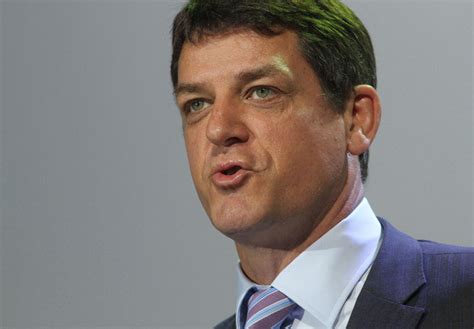
Stephen Jennings.
Shortly after, Jennings moved to replace Nyagah as company chairman, installing coffee baron Pius Ngugi in his place and expelling the Kenyan-aligned senior management from Tatu City Limited. It was a boardroom coup executed with the precision available only to someone who had already quietly rewritten the shareholding register in his own favour.
The EACC found evidence of a ‘loan back scheme’ paper transactions involving chains of interlocking companies, nominee shareholders, and purported financing structures designed to conceal money flows and deny Kenya its taxes.
IV. THE TAX MACHINE EACC, KRA, AND THE SPV CAROUSEL
While the shareholder war consumed column inches, a parallel financial story was developing that went far beyond any dispute between the partners. Kenya’s regulatory and investigative agencies the Kenya Revenue Authority, the Ethics and Anti-Corruption Commission, and ultimately the Directorate of Criminal Investigations began piecing together evidence of a systematic scheme to strip billions of shillings from Kenya’s tax base.
The scheme, as described in EACC court filings and later confirmed by High Court Justice Esther Maina in her 2022 ruling allowing the EACC probe to continue, operated roughly as follows. A Tatu City or Kofinaf affiliate would acquire a parcel of land from a related company at a fraction of its real market value, dramatically lowering the stamp duty payable on the transaction. The land would then be transferred to a freshly incorporated special purpose vehicle companies like Purple Saturn Properties featured EACC documents. Ninety-nine point nine percent of that SPV’s shares would be transferred to a Mauritius-registered entity. The Mauritius entity would then sell the parcel to the ultimate buyer at full market value. Because this final transaction was structured as a share transfer rather than a land transfer, it attracted stamp duty of one percent rather than the four percent applicable to direct land sales. The taxman collected duty on a phantom price; the real value escaped offshore.
The documentation that landed before the National Assembly’s Lands Committee was damning. Mwagiru tabled official KRA and Ministry of Lands records showing that land purchased for Sh1.19 billion had been declared to authorities at Sh340 million for stamp duty purposes. A separate parcel purchased at Sh884 million was declared at Sh219 million. In perhaps the most brazen example cited by the EACC, a property sold for Sh748 million was transferred to a local firm, which moved it to a foreign entity, which then transferred it locally at market value of Sh4 billion. The Kenya Revenue Authority collected stamp duty on Sh748 million. The remaining Sh3.25 billion in value evaporated offshore, tax-free.
The EACC named Stephen Jennings and then-country head Chris Barron as persons of interest. The High Court explicitly found that the matters under investigation transcended the internal shareholder dispute and concerned the commission of tax evasion and money laundering offences. The EACC characterised what it found as a loan back scheme a recognized money laundering methodology in which paper transactions between related entities are used to move funds while obscuring their origin and ownership.
In 2018, the KRA demanded Sh1.35 billion in tax arrears and accrued interest from Tatu City directors and Kofinaf. The taxman placed restrictions on further land transactions until the amount was cleared. Kofinaf has been fighting the KRA at every tribunal level.
After losing before the Tax Appeals Tribunal in April 2024, it filed a further appeal to the High Court, with the principal sum, interest, and penalties having by then accumulated to Sh656.7 million on that single tranche alone.
In December 2024, a magistrate granted the DCI warrants to seize documents from Tatu City, Kofinaf, and their law firm Lutta and Company Advocates, ruling that advocate-client privilege cannot shield documents from criminal investigation.
Rendeavour’s response to these investigations has been consistent and instructive. When Nation Media contacted the company’s COO and Kenya country head Preston Mendenhall with questions about the money laundering and tax evasion probes, he described the questions as old material covered ad nauseam by NMG for years, with no proof whatsoever.
The courts have repeatedly disagreed with that characterisation, continuing to allow the investigations to proceed.
V. THE LONDON ARBITRATION WHAT THE AWARD ACTUALLY SAYS
The London Court of International Arbitration award of February 2018 has been treated by Rendeavour’s communications operation as the definitive verdict on the Tatu City dispute proof that Shah, Nyagah, and Mwagiru were fraudsters who got what they deserved. A careful reading of the 127-page award by arbitrator Simon Nesbitt QC is more textured than the press releases suggest.
The core finding was that Manhattan Coffee Investment Holdings the Mauritian vehicle controlled by the Kenyan investors had repeatedly represented to SCF Holdings II that a $20 million deposit had already been paid to the Socfinaf land sellers when it had not.
The arbitrator found this was a fraudulent misrepresentation that affected Jennings’ investment decisions and awarded $15 million plus interest and costs — a total approaching $17 million against the Kenyan vehicle.
What receives less attention is the arbitrator’s description of Vimal Shah’s testimony as insufficiently consistent with the documentary evidence. The award also had to navigate a record in which both sides had been engaged in sustained misconduct: the Kenyan partners had indeed misrepresented the deposit status, but the broader record showed a project relationship that had been dysfunctional from almost its first day, with accusations flying in both directions about who was short-changing whom, whose land transfer records were accurate, and whose internal accounts could be trusted.
The critical procedural fact the one that converted an arbitration award into a mechanism for ownership transfer is that the Kenyan partners did not challenge the award within the permitted 28-day window. This was not a decision on the merits. No court examined the substance of Jennings’ conduct, the retrospectively inflated interest rate, the unilateral shareholding dilution, or the offshore money flows. The award became final and enforceable solely because the losing party failed to meet a procedural deadline. Jennings then moved to Mauritius the very offshore haven the locals had agreed to use for their holding company and petitioned to wind up Manhattan Coffee on the strength of the unpaid award.
The liquidation of Manhattan Coffee followed in 2023. Mwagiru’s attempts to fight it, first in Mauritian courts and then before the Privy Council, ran into a wall of procedural standing law that had nothing to do with who was right on the underlying merits. Once Manhattan Coffee was in liquidation, he was neither a creditor nor a shareholder. He had no standing to pursue derivative action. The ex parte orders that had allowed him to proceed at first instance were set aside. The five-judge Privy Council board, in its May 16, 2026 ruling, confirmed the outcome. The Cedar shares are now headed to the liquidator.
SCF Holdings II is positioned to acquire the Cedar shares from the liquidator and offset the purchase price against the arbitration debt it is owed potentially acquiring effective control of a national strategic asset at a fraction of its value.
VI. THE ACQUISITION THAT CORRUPTED THE FOUNDATION
The story of how the Tatu City land was originally assembled deserves more scrutiny than it has received. The Kenyan investors’ initial vehicle, Waguthu Holdings Limited, attempted in February 2007 to raise capital through a public share placement managed by Suntra Investments.
Parliamentary testimony by Suntra’s management confirmed that Nyagah and Mwagiru never submitted the documents required to complete the placement.
The share issue was cancelled. Individuals who believed they had subscribed to Waguthu Holdings shares and who later came forward to Parliament claiming they had invested in what was supposed to become Tatu City potentially have claims against Mwagiru and Nyagah for the failed placement, not against Rendeavour.
But the Rendeavour-aligned narrative that this proves the Kenyan investors contributed nothing and deserved nothing ignores the finder’s fees, the local connections, the political access that was openly acknowledged as part of what the Kenyan partners were bringing, and the $11 million loan advanced to them to take a shareholding a loan structured on terms that made it nearly impossible for them to emerge from debt, at interest rates applied retrospectively without their consent.
Nyagah, for his part, has alleged that the original land purchase values declared to the Ministry of Lands were deliberately understated, with the difference being quickly repatriated through Renaissance Partners’ offshore networks before Kenyan authorities could track the flows.
He appeared before the National Assembly Lands Committee and told MPs the project involved loss of land, money and taxes to the government, and that the board was dysfunctional because the foreign side refused to allow the full board to meet.
VII. THE PATTERN OF SQUEEZING EVERY OFFICEHOLDER
One of the most revealing threads in the Tatu City story is how Rendeavour has related to every official, governmental body, or institutional actor that has sought any degree of accountability from the project. The pattern is consistent enough to constitute a strategic posture rather than isolated incidents.
When the DCI began its money laundering probe and sought documents from Tatu City and its law firm in 2024, Tatu City and Kofinaf filed applications arguing that the search warrants had been wrongly issued and that advocate-client privilege shielded the documents. When the EACC launched its tax evasion investigation in 2017, Tatu City and Kofinaf went to court to block the probe litigation that consumed five years before a High Court judge finally confirmed the EACC’s mandate to investigate in 2022.
When Kiambu County Governor Kimani Wamatangi’s office sent a letter in April 2024 requesting that Tatu City surrender 54 acres, including land for the governor’s official residence, as a precondition for approving the revised master plan, Rendeavour’s response was to immediately call a press conference and brand the request extortion valued at Sh4.3 billion.
That characterisation may well be accurate the demand was procedurally extraordinary and legally questionable. But what Rendeavour did not advertise was its own history of filing parallel extortion allegations against every governor of Kiambu County who had ever asked the project for anything, a pattern that the Grokipedia research on Tatu City describes as broader allegations against successive Kiambu governors asserting a pattern of requesting land parcels worth millions.
Former Governor William Kabogo found himself in a similar position: he claimed he had paid Sh348 million to Rendeavour Services as part-payment for 100 acres of land. Jennings publicly challenged him to produce a signed agreement. Kabogo had none. Or at least not one that Rendeavour acknowledged. The accusation of blackmail flew in both directions.
When a section of Kenyan workers at the project complained about treatment by American country head Preston Mendenhall and accused him of racism and harassment, they wrote to the Immigration Department asking that his work permit not be renewed. The complaints were eventually dismissed or went nowhere, but they added to a picture of a project managed with maximum aggression toward any domestic accountability mechanism.
Jennings himself, at a 2015 public event at the Louis Leakey Auditorium styled as TatuTrueTalk, stood before a Nairobi audience and declared that in 25 years of working in around 35 emerging markets, his experience with the Kenyan police investigation and immigration interrogations of Rendeavour staff over work permits had been his first experience of that form of cheap harassment. The framing was vintage Jennings: the embattled foreign investor, the righteous outsider being shaken down by the corrupt local system.
The audience that had gathered to hear his accusations against Shah and Nyagah left largely persuaded. What few examined was the remarkable audacity of a man whose last major business venture had collapsed with hundreds of millions of dollars in debts, who was simultaneously under investigation for tax manipulation in the project he was describing as a victim of corruption.
VIII. THE OFFSHORE ARCHITECTURE AS WEAPON
The deepest structural trick in the Tatu City saga is one that virtually every mainstream account has failed to properly anatomise: the offshore architecture was not simply a tax planning measure or a corporate governance preference. It was designed from the outset to create a legal environment in which disputes could only be resolved on terms that consistently favoured whoever had the most resources to sustain expensive international litigation.
When the Kenyan investors wanted to fight the arbitration award, they needed to mount a challenge in London within 28 days at LCIA costs, with English QC fees, from Nairobi. They did not. When they tried to use Kenyan courts to contest the shareholding dilution, the structure itself told the courts they had no jurisdiction: English law governed, LCIA arbitrated. When they tried to fight the Mauritius liquidation from Kenya, they were told they had to litigate in Port Louis — a jurisdiction in which they had no established legal networks and whose insolvency law they had never stress-tested.
The irony is nearly Shakespearean.
The offshore architecture that the Kenyan partners agreed to and which, in the early years, they likely saw as giving their own position some protection from Kenyan judicial variability became the precise mechanism by which they were destroyed.
Cedar IV, Manhattan Coffee, Blacknight Holdings, Redline Investments Corporation: these were vehicles designed by lawyers whose primary loyalty was to the transaction structure, and the transaction structure ultimately served whoever could most effectively weaponize it. That was always going to be the majority investor with access to London arbitration and Mauritius insolvency proceedings.
The Privy Council’s May 2026 ruling did not examine the merits of any of this. It ruled on standing in a liquidation. But it locked in an outcome that had been architecturally predetermined from the moment the first shareholder agreement was signed.
The EACC, KRA, and DCI have all independently arrived at the same destination: something is deeply wrong with the money flows at Tatu City. The investigations remain open.
IX. WHAT JENNINGS IS DOING NOW AND WHY IT SHOULD ALARM FUTURE PARTNERS
Since the Privy Council ruling, Rendeavour has continued its aggressive public positioning campaign. The Tatu Tribune website a Rendeavour-operated property that functions as a counter-narrative operation continues to frame the entire saga as one of a righteous foreign investor fending off criminal local partners.
Rendeavour has announced new board appointments, including former US Ambassador to the United Nations Linda Thomas-Greenfield, whose appointment Rendeavour’s lead American shareholder Frank Mosier described as reflecting the organization’s commitment to versatile emerging market expertise.
The African Continental Free Trade Area has named Rendeavour as its inaugural private sector implementation partner. Stephen Jennings met with Deputy President Kithure Kindiki in August 2025 to discuss investment climate and mixed-use special economic zones.
The institutional rehabilitation narrative is carefully managed. What it does not address is the open file at the EACC, the DCI’s ongoing document seizure proceedings, the Kofinaf tax appeal at the High Court, or the question of what happens to the Kenyan public’s interest in the Cedar IV shares now headed to the liquidator’s auction and potentially purchasable by SCF Holdings II at a discount against its own arbitration debt.
Rendeavour is simultaneously expanding to new African markets Alaro City and Jigna City in Nigeria, Appolonia City and King City in Ghana, Roma Park in Zambia, Kiswishi in the Democratic Republic of Congo. In each of these jurisdictions, Rendeavour is presenting itself as Africa’s largest new city builder, bringing investment, jobs, and infrastructure.
The Tatu City playbook find local partners with connections and land networks, structure the relationship through offshore vehicles pointing to London arbitration, advance financing on terms that create dependency, then use procedural mechanisms to strip those partners of their positions when convenient — has not been publicly examined in any of those markets.
At least one of those markets, Nigeria, has already seen the Alaro City project generate disputes with the Lagos State Government over land allocation and development pace.
The details of those disputes have not been fully reported in the English-language press. Investors, governments, and potential partners in all of Rendeavour’s African markets would benefit from a thorough reading of the Tatu City court record before signing anything.
X. THE VERDICT THIS COVERAGE HAS REFUSED TO DELIVER
Kenya Insights does not propose that Vimal Shah, Nahashon Nyagah, and Stephen Mwagiru were innocent actors brought down by foreign cunning alone. The record is clear that Nyagah attempted to transfer shareholding in Tatu City’s onshore companies to his sister, driver, and church members through nominee arrangements that were straightforwardly fraudulent.
Mwagiru filed caveats using a falsified Form CR12. Shah’s testimony was described by the London arbitrator as insufficiently consistent with the documentary evidence. The misrepresentation about the $20 million deposit payment was found, on the evidence, to have occurred. These are serious findings.
But the story that has been largely erased from the official narrative of Tatu City is the other side of that ledger. Stephen Jennings arrived in Kenya in the wake of a spectacular financial collapse in Russia, carrying debts that required urgent liquidation.
He structured a transaction with local partners on terms that made them dependent on his goodwill from day one. He advanced financing at interest rates that were retroactively inflated without the other side’s knowledge. He unilaterally diluted their shareholding without board approval.
He used the project’s revenues to service his personal debts through a Cypriot vehicle before any Kenyan investor saw the accounts. He constructed an offshore architecture that made Kenyan courts irrelevant. He used that architecture to enforce an unchallenged arbitration award in a jurisdiction the local partners could not effectively access.
He is now positioned to acquire the distressed Cedar shares from a Mauritius liquidator at a discount by setting off the arbitration debt meaning the entire twenty-year legal campaign may culminate in Rendeavour acquiring effective total control of a Sh240 billion Kenyan national asset for, in net terms, close to nothing.
The EACC, KRA, and DCI have all independently arrived at the same destination: something is deeply wrong with the money flows at Tatu City. The EACC’s working theory of a loan back money laundering scheme has survived five years of litigation by Rendeavour to quash the investigation.
The KRA has assessed over a billion shillings in stamp duty and income tax arrears.
The DCI has seized documents from lawyers. None of these investigations has been concluded. None of them has been abandoned.
In public, Rendeavour dismisses all of it as old material with no proof. In court, the probes keep surviving.
A final observation for any investor, government partner, or institutional creditor considering a relationship with Rendeavour. The man at the top of this organization has, in his career, presided over the collapse of a $650 million debt pile at Renaissance Group, the effective failure of Renaissance Capital requiring a forced transfer to an oligarch, a two-decade legal war in Kenya that consumed enormous judicial resources across four jurisdictions while the purported development project sat largely incomplete, ongoing investigations by three separate Kenyan regulatory and law enforcement bodies, and now a legal outcome in which the Kenyan partners in a national development are being stripped of their positions through a procedural technicality rather than a substantive resolution.
That is not a record of a city builder. It is a record of a sophisticated financial operator who has consistently constructed situations in which he holds more cards than everyone else at the table, and who uses those cards with precision when they are needed. Kenya was not his first arena. It will not be his last. Any party dealing with him would do well to read this file before they pick up a pen.
Kenya Insights allows guest blogging, if you want to be published on Kenya’s most authoritative and accurate blog, have an expose, news TIPS, story angles, human interest stories, drop us an email on [email protected] or via Telegram









Humiliated, Handed Sh1,000 and Sent Away: Furious Residents Return Nathif Jama’s Money, Accuse Governor of Arrogance and Inhumane Treatment of Sick Woman

ICC’s Karim Khan Suspended Over Sexual Misconduct Claims

The Conquest of Tatu City, A New Zealander Story

VANISHING ACT: How China Jiangxi International Pocketed Billions in Kenyan Public Contracts, Then Walked Away

THE GROUP CHAT THAT BROKE THE CARTEL: How Kenya’s Biggest Mattress Firms Used WhatsApp to Fix Your Prices, Then Used It to Destroy Themselves

Court Upholds Gachagua Impeachment, Awards Him Sh50M In Constitutional Damages To Be Paid By Senate

Somali FIFA Referee Denied Entry To US Ahead Of 2026 World Cup: Reports

David Maraga: Kenya’s Ex-Chief Justice Arrested At Protest Against Building On National Park

KRA Warns It Will Automatically File Tax Returns for Kenyans Who Miss June 30 Deadline Using Its Own Data

Govt Plans to Monetise eCitizen Data in New Revenue Drive

Cement, Cash and Courts: How the Hashu Dynasty Crushed the Ramji Brothers for Fourteen Years and Why the Walls Are Now Closing In

Inside The Urban Planning Cartel That Owns Nairobi

Why Ruto’s Favourite Candidate Adan Mohammed Could Be Locked Out of the KRA Top Job

LifeCare on the Brink: SHA Fraud, Stolen Wages, and the Rotten Empire Jayesh Saini Built

Este Medical Kenya Fights American’s Explosive Complaints

The Rot Inside Absa: How Bank Insiders Are Looting Nairobi’s Customers

Betika Faces DCI Probe, Directors Arrest and License Revocation Over Massive 29.5 Million Safaricom Customers’ Data Breach

Inside FAFSA Fraud: How Kenyan Cybercriminals Siphoned Millions from America’s Sh12 Billion Student Loan System

Fresh Move Launched to Remove Kenya Railways MD Mainga From Office After Awarding Sh817 Million Consultancy Contract

Court Confirms Safaricom Customers Data Was Sold To Betting Companies In Seven-Year Cover-Up
-
 Investigations4 days ago
Cement, Cash and Courts: How the Hashu Dynasty Crushed the Ramji Brothers for Fourteen Years and Why the Walls Are Now Closing In
-
 Investigations3 days ago
Inside The Urban Planning Cartel That Owns Nairobi
-
 Investigations2 weeks ago
LifeCare on the Brink: SHA Fraud, Stolen Wages, and the Rotten Empire Jayesh Saini Built
-
 Investigations1 week ago
Betika Faces DCI Probe, Directors Arrest and License Revocation Over Massive 29.5 Million Safaricom Customers’ Data Breach
-
 Investigations4 days ago
Fresh Move Launched to Remove Kenya Railways MD Mainga From Office After Awarding Sh817 Million Consultancy Contract
-

 News2 weeks ago
Eight Students Arrested In Kenya After Suspected Deadly School Arson Attack
-
 News1 week ago
How Uhuru’s Deal With Obama In 2015 Paved Way For America’s Ebola Plan In Kenya
-

 Investigations2 weeks ago
The Invisible Hand: Al Jazeera Further Exposes How Safaricom Became The Regime’s Most Powerful Spy